
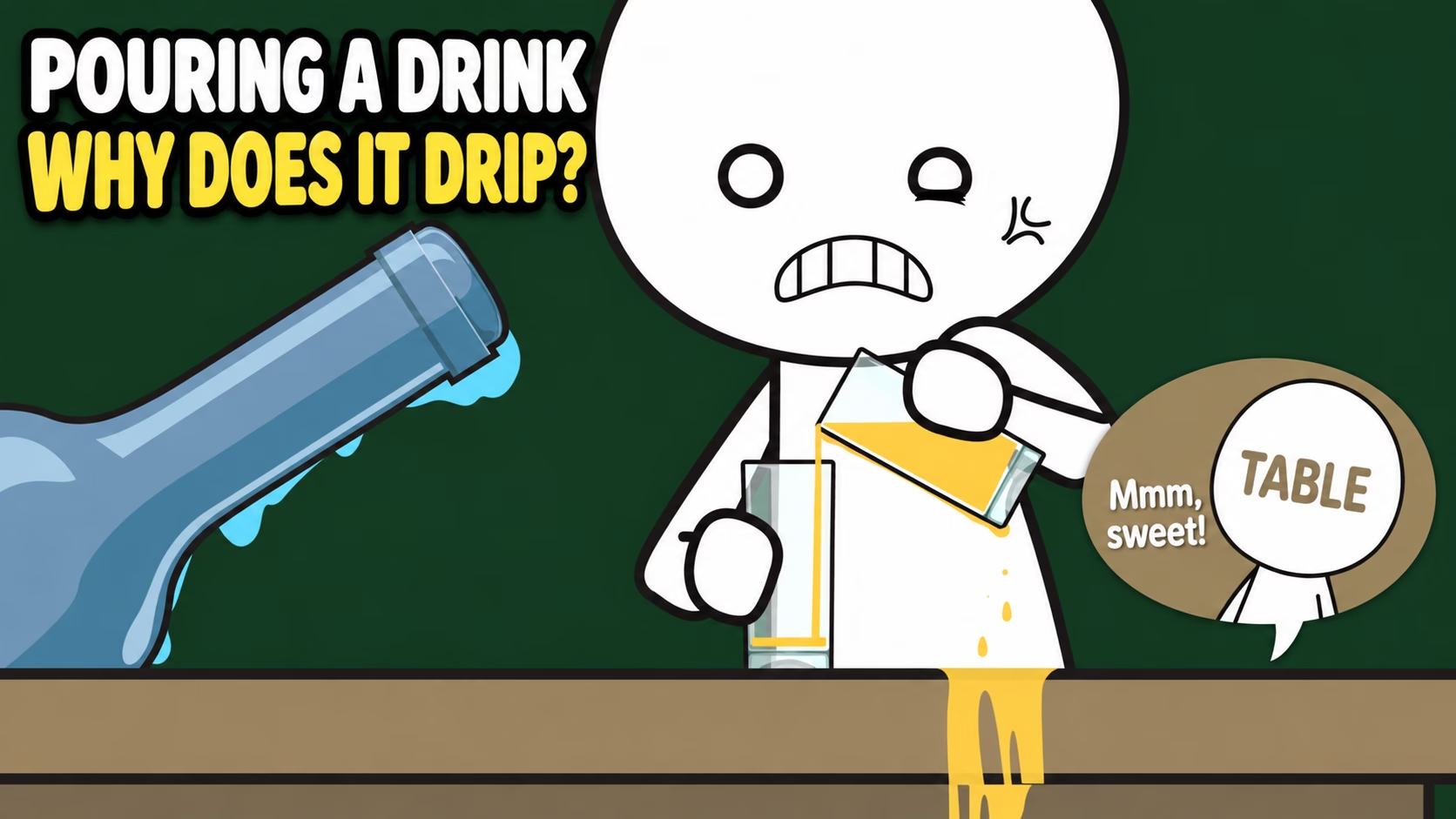
Have you ever tried pouring a drink from one cup into another, only to have it run down the outside? The same thing can happen when you pour wine or another drink from a glass bottle. As you lift the bottle, a drop or two slips down its neck and ends up on your hand or the table. Why does this happen?
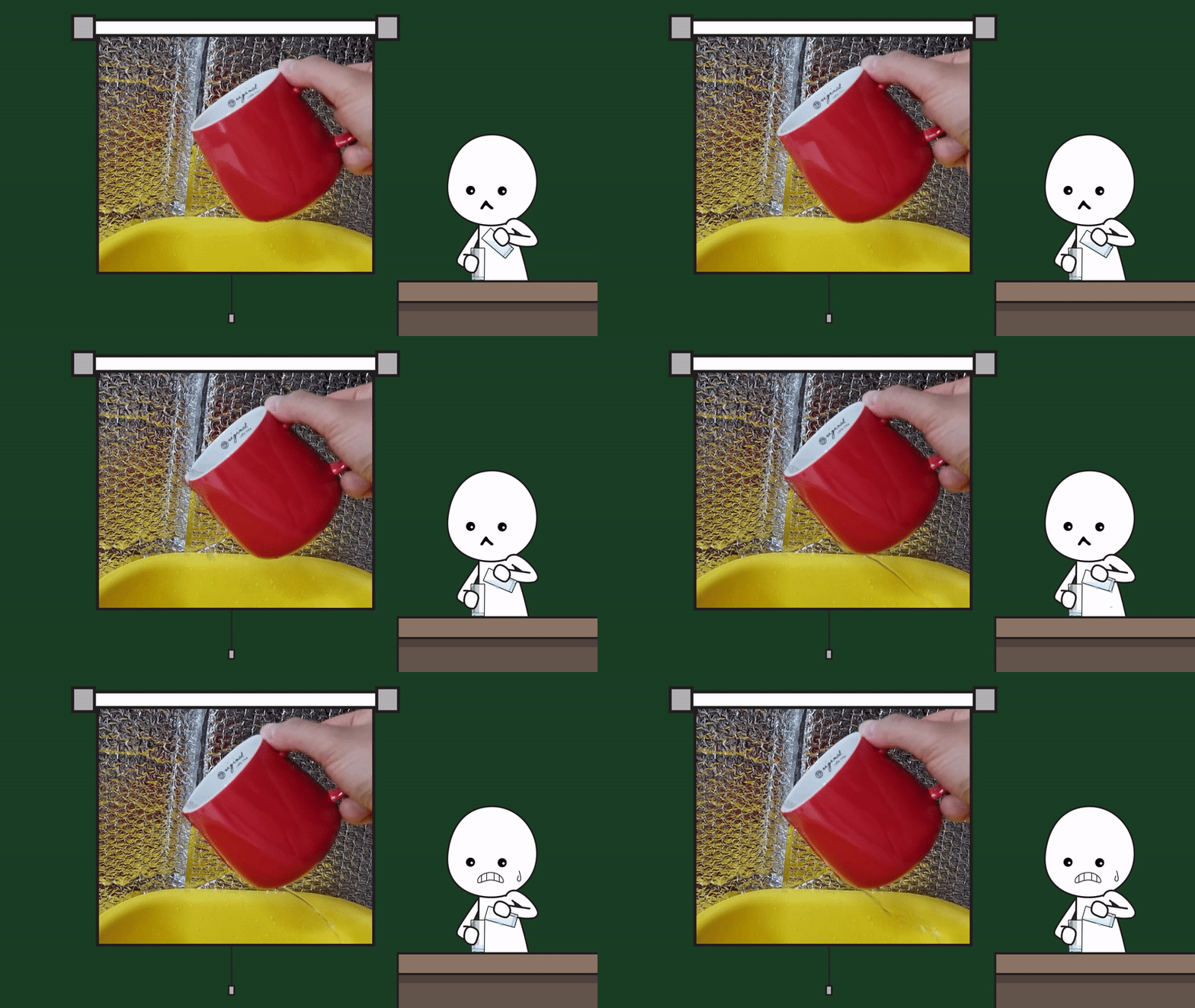
The teapot effect: why liquid clings to the side
This phenomenon is called dribbling. Israeli scientist Markus Reiner studied it in 1956, calling it the “teapot effect.”
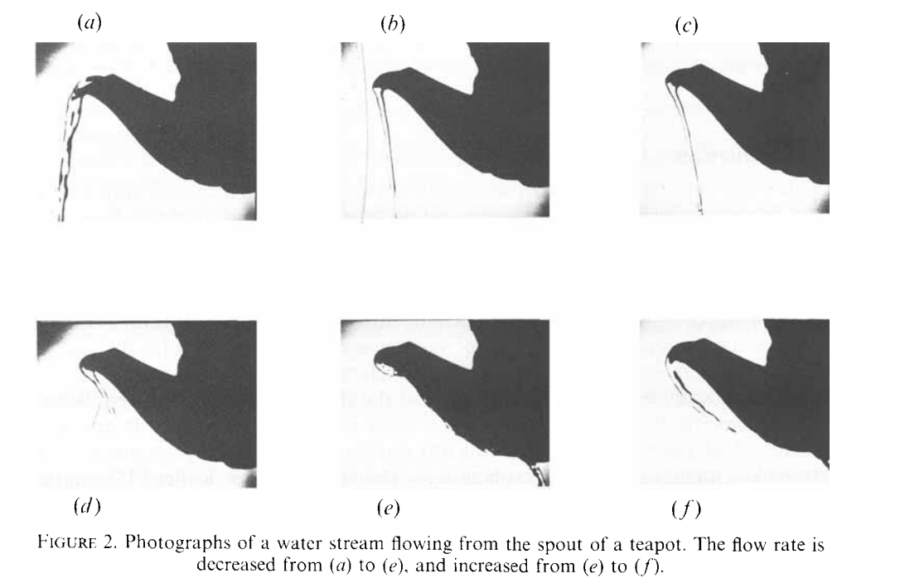
In this sequence, the water gradually moves closer to the teapot as the flow rate—the volume of fluid passing through per unit of time—decreases. The same effect occurs with cups and glass bottles.
In 2010, Cyril Duez and colleagues at the University of Lyon in France investigated the cause through experiments and theory. They described it as a hydro-capillary effect, or an inertial-capillary mechanism. Let’s look at the diagrams to see what that means.
Curved rims and pressure differences
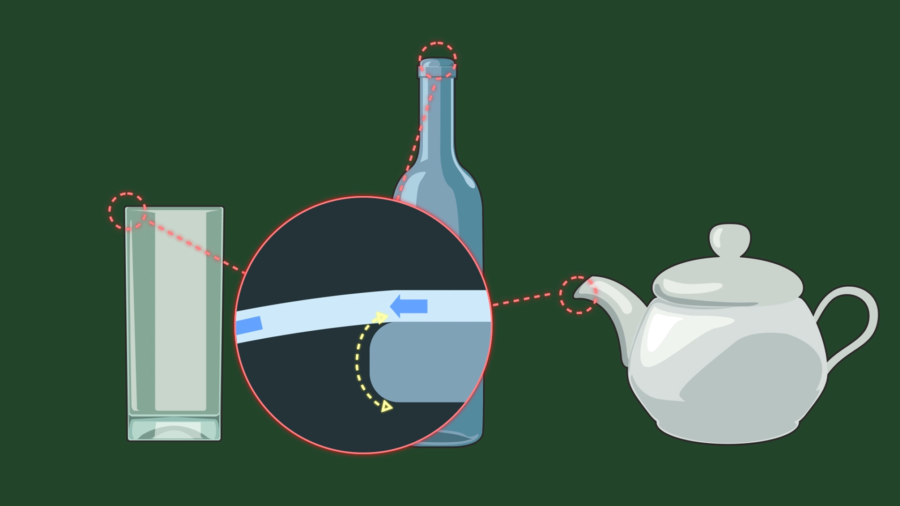
Whether it is a cup, a glass bottle or a teapot, the edge where the liquid leaves has a curvature. As liquid flows over this curved solid surface, a pressure difference develops between the upper and lower sides of the liquid.
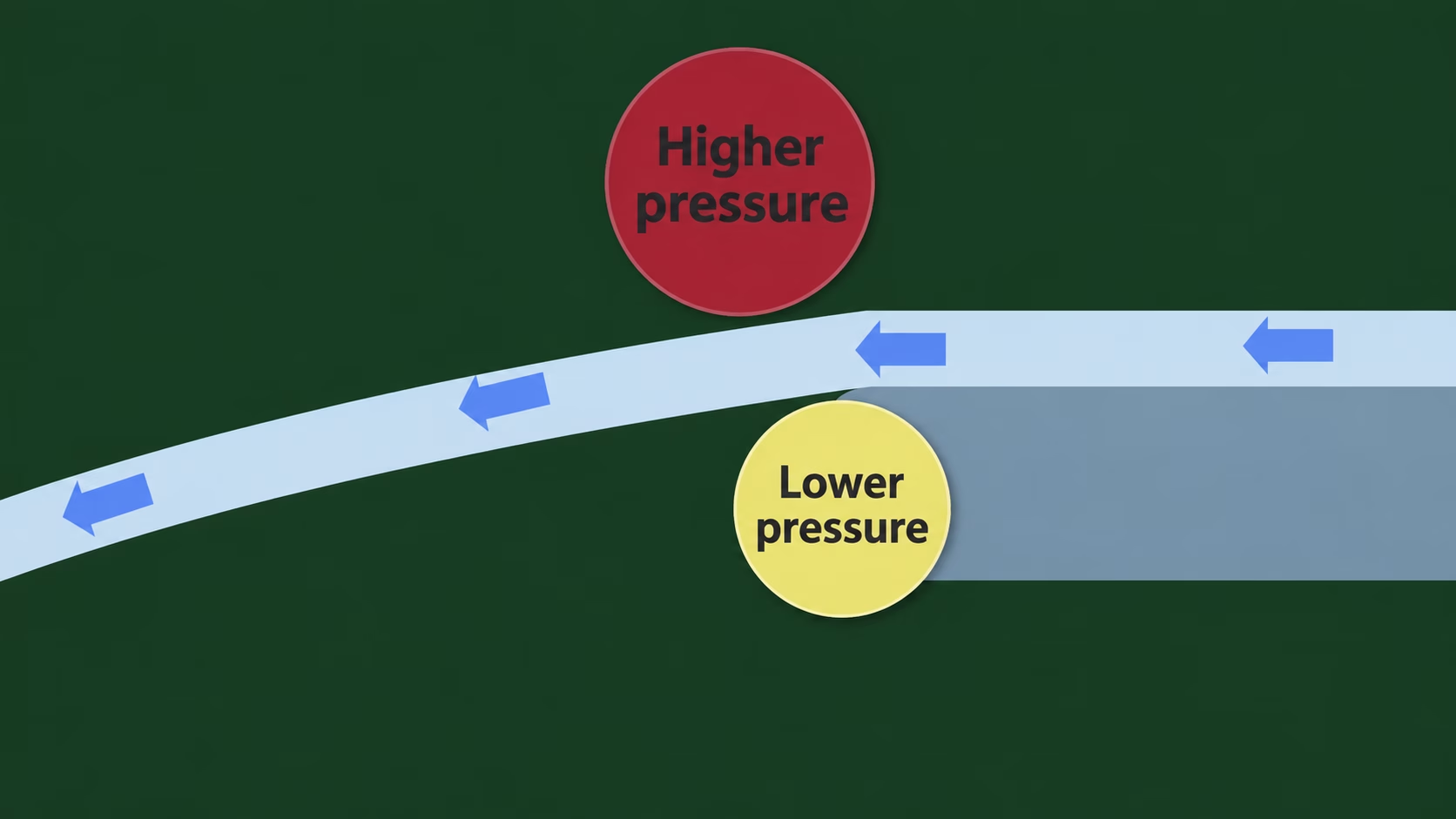
The pressure is higher above the liquid and lower below it. Rather than continuing straight ahead, the liquid is pushed toward the solid surface and follows its curve. This tendency to follow a surface is known as the Coanda effect.
Wettability and the capillary meniscus
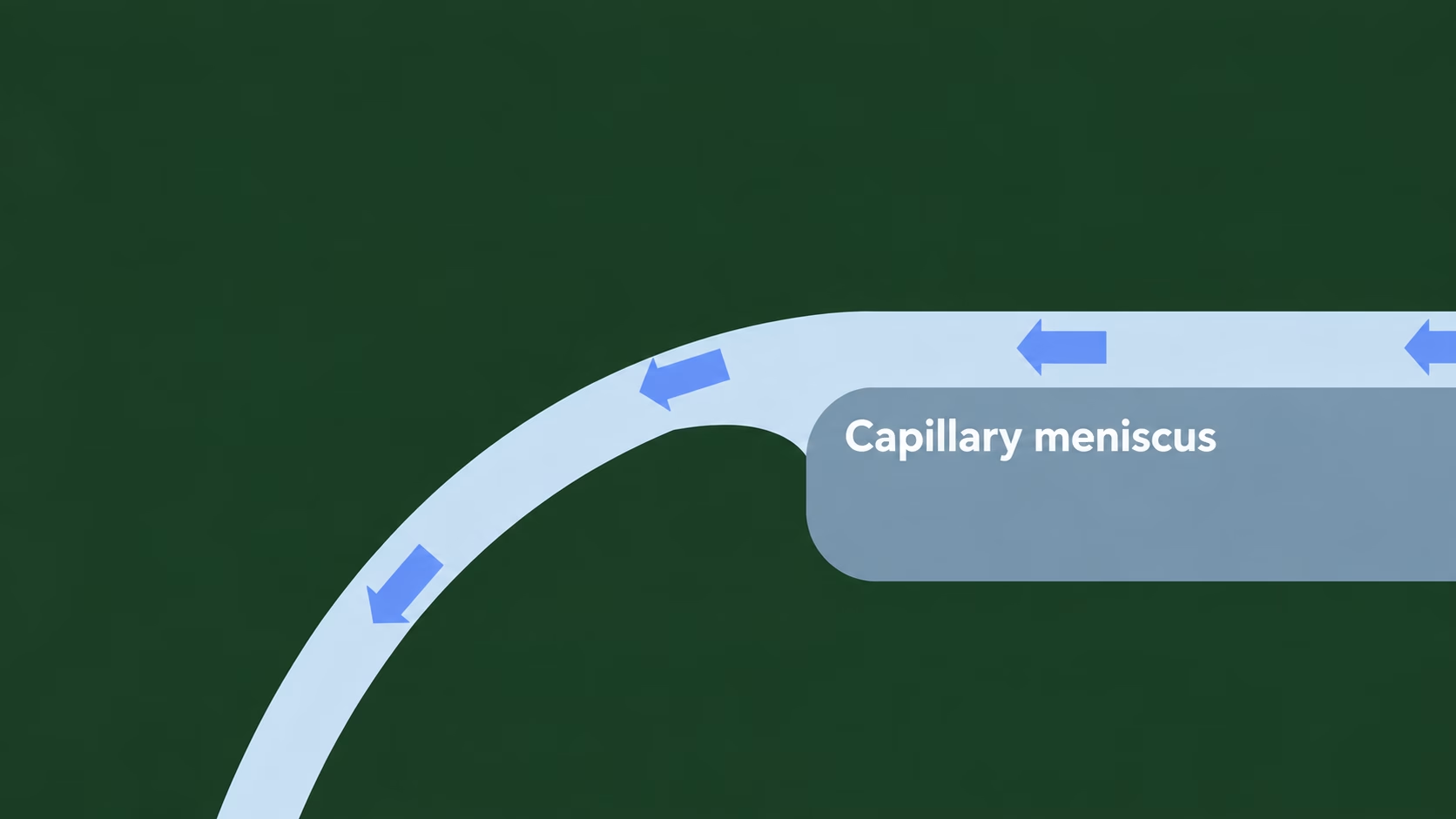
As the solid and liquid interact, greater wettability allows the liquid to cling to the solid surface and form a capillary meniscus.
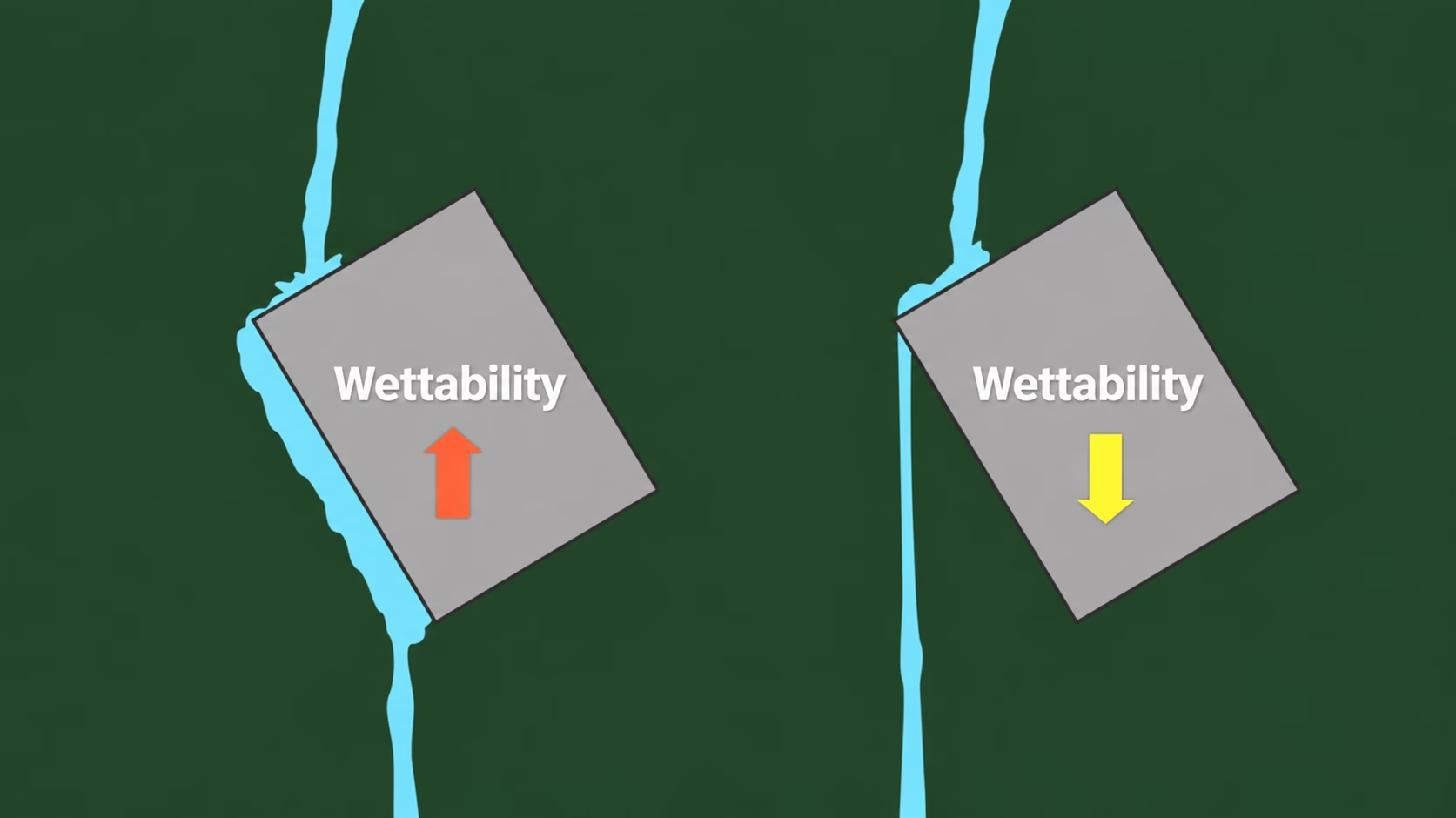
Wettability describes how readily a liquid spreads over a solid surface. A meniscus is the curved liquid surface associated with capillary action, such as the curved surface you see inside a narrow tube. Here, the flowing liquid clings more closely to the solid instead of following its original path. This is why a drop or two can run down the outside when you lift a container after pouring.
Three factors that affect the teapot effect
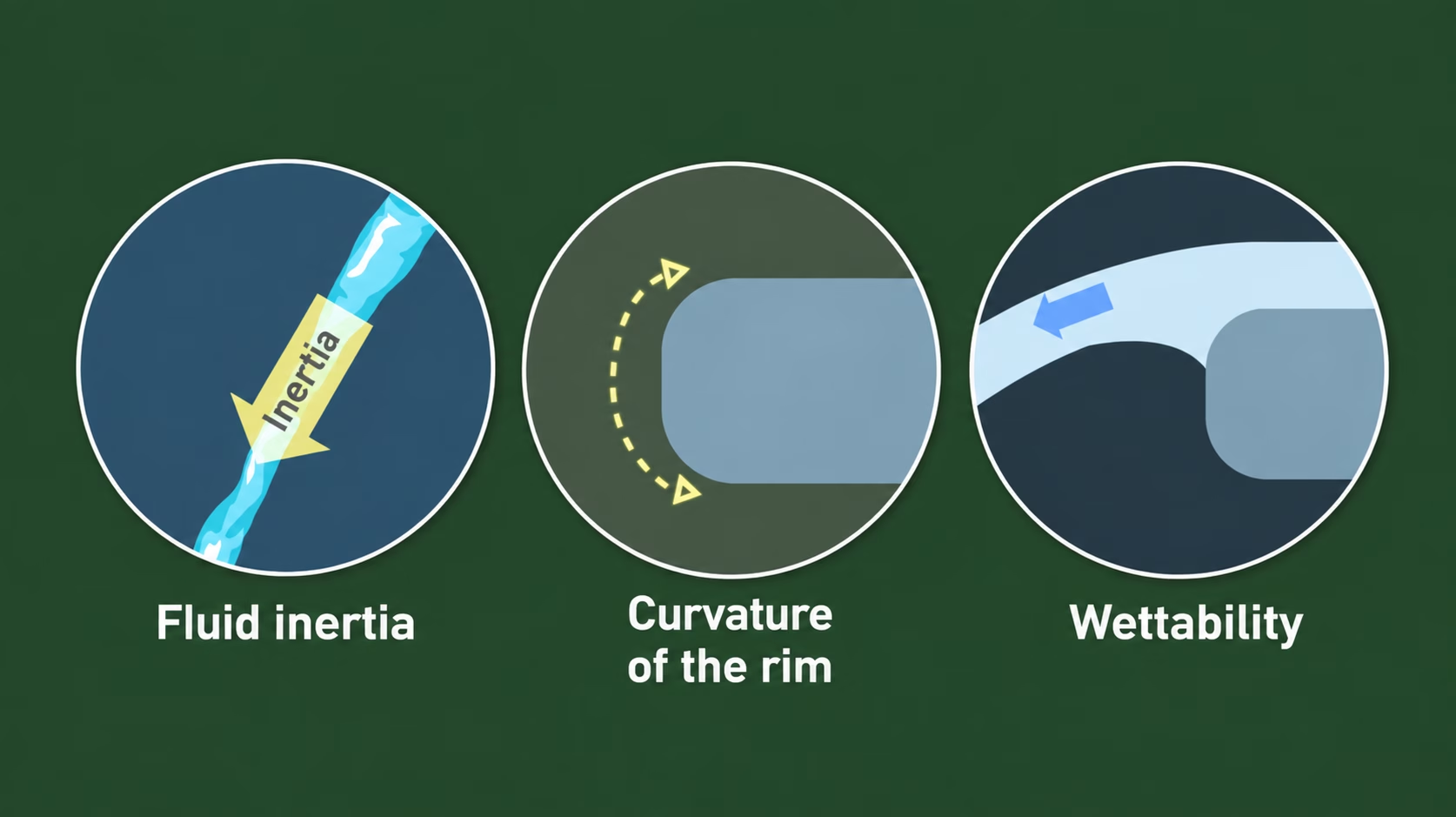
Duez and colleagues identified three main factors: the liquid’s flow speed, the curvature of the pouring edge, and wettability. In their account, viscosity and gravity were, surprisingly, not the determining factors.
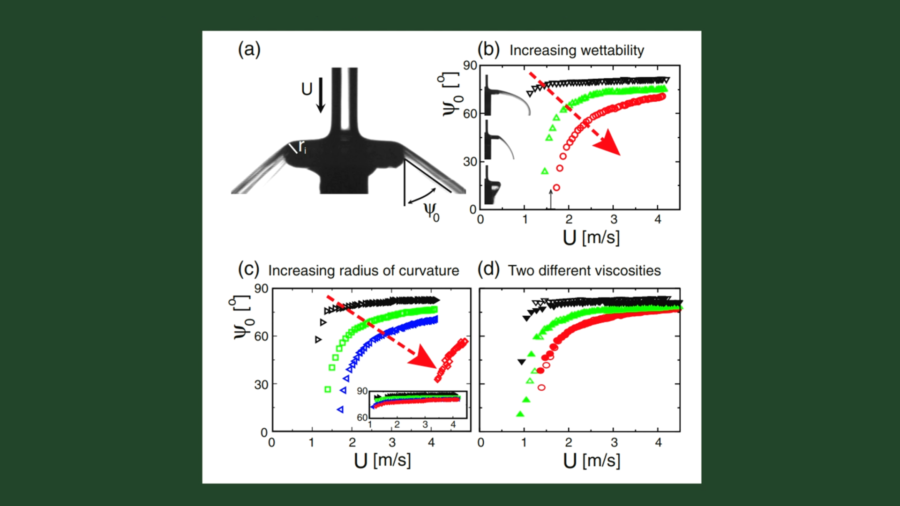
In these graphs, values closer to zero on the vertical axis indicate a stronger teapot effect. The results show that the effect becomes stronger when the flow speed (U) decreases, when wettability increases, and when the radius of curvature at the pouring edge increases.
How to reduce drips when pouring
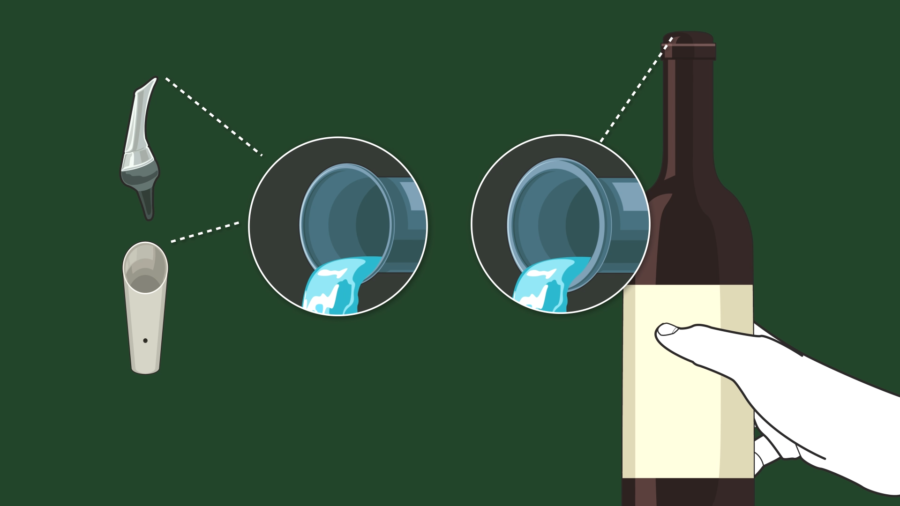
One way to avoid the teapot effect is to finish pouring with a quick upward movement. Another is to make the pouring edge thin and sharp, reducing its radius of curvature. Wine pourers and drip-stop inserts use this principle.
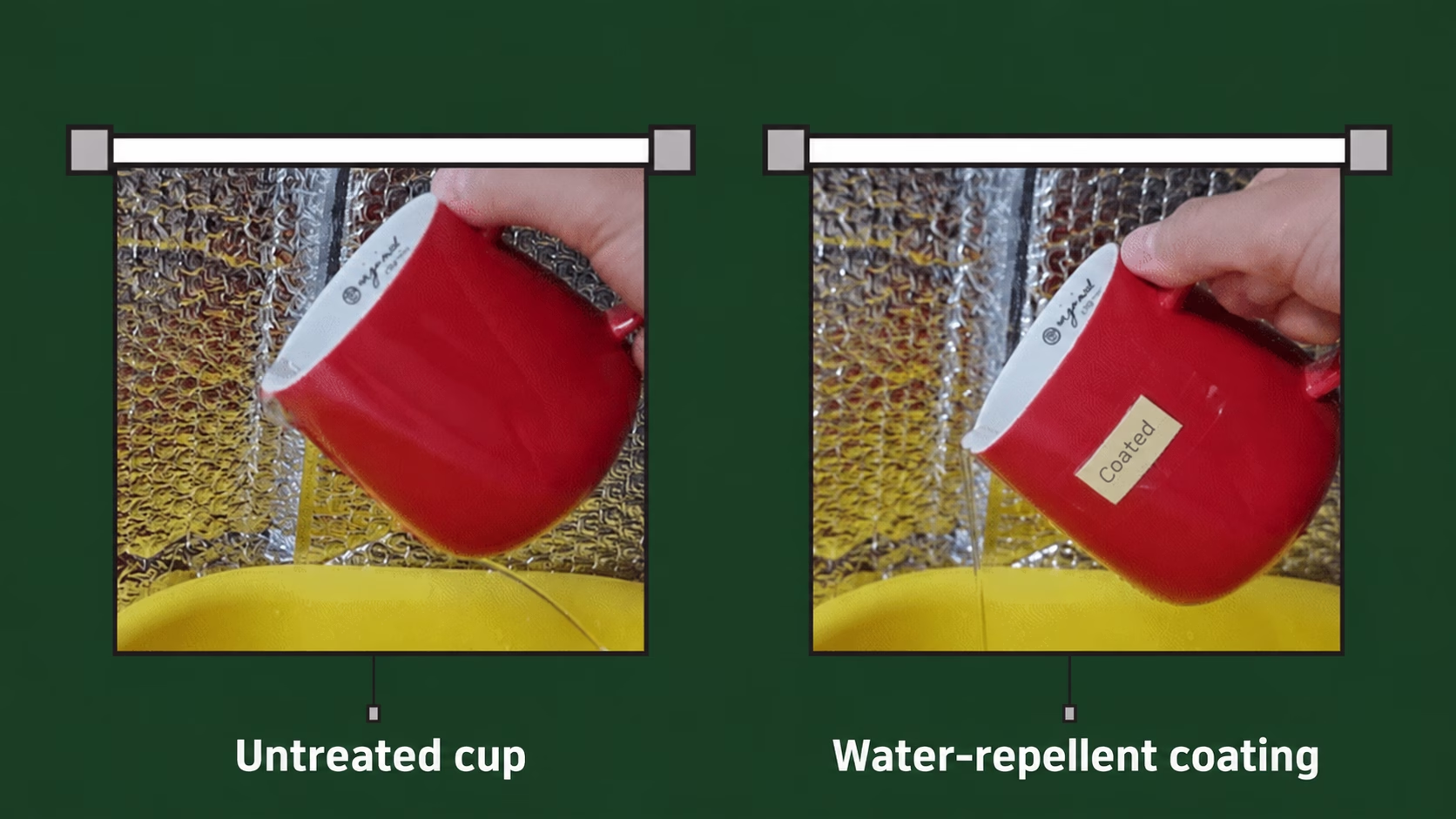
Wettability can also be reduced. Applying a water-repellent coating can make the edge superhydrophobic. In the video, the coated cup shows much less of the teapot effect. Has that answered your question?
Script contributed by EngNerd, a PhD student in Mechanical Engineering at Seoul National University at the time of the original publication.
Scientific consultation: Professor Lee Chung-yup, Department of Mechanical Engineering, Kyung Hee University.
Copyright. 사물궁이 잡학지식. All rights reserved
More English articles · Read the original Korean article
Watch the original video below. For English subtitles, turn on captions (CC) and choose English (United States) in the player settings. You can also select the original Korean audio under Audio track.