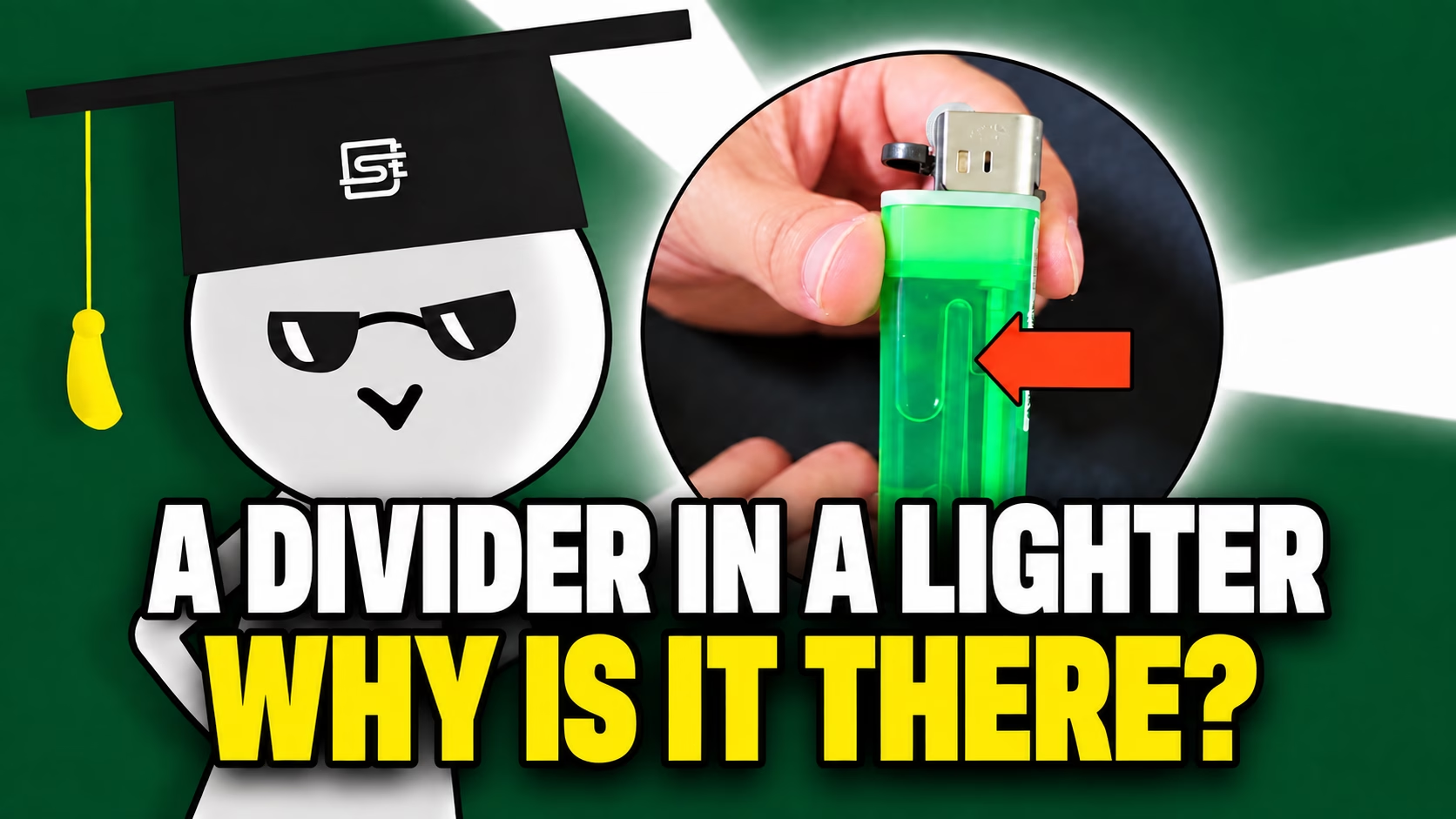
A lighter is a convenient way to make the flame needed for smoking. There are oil lighters, electric lighters and gas lighters, with gas lighters being a common choice. A typical gas lighter has a flat plastic container and an ignition mechanism attached at the top.
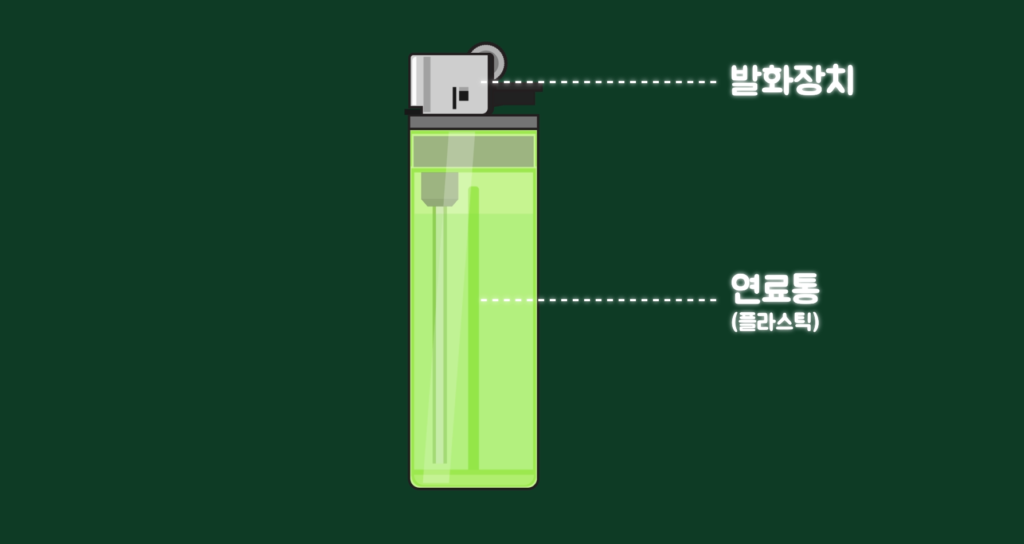 Ignition mechanismFuel tank
(plastic)
How a gas lighter produces a flame
One type of ignition mechanism uses a wheel to scrape a metal flint made of ferrocerium. Another uses a piezoelectric element: pressing a button produces electrical polarization. The plastic container holds flammable butane that has been compressed at high pressure into a liquid. Liquefaction is the change from a gas to a liquid.
While generating a spark, you press a button that lets butane from the container pass through a small tube and vaporize as it leaves the nozzle. Vaporization is the change from a liquid to a gas. The butane meets the spark, reaches a temperature above its ignition point and burns to produce a flame.
This raises our question. Nothing in that basic process seems to require a divider in the middle of the container. Is it there to reduce the bottom area and raise the liquid level so the tube stays submerged? Or is it a manufacturer’s trick to put less fuel in the lighter?
The divider reinforces the fuel tank
The answer is that it acts as reinforcement, helping consumers use the lighter safely. Let’s see how it reinforces the container and what happens without it.
Butane’s boiling point is about −0.5°C. It is therefore a gas at room temperature, yet the butane in a gas lighter is liquid because it has been compressed at high pressure.
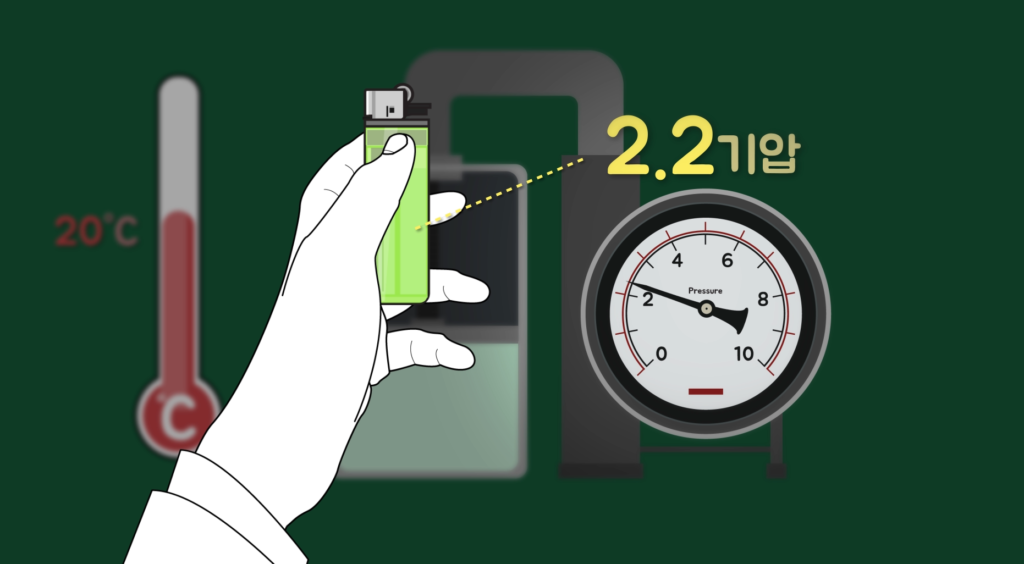 2.2 atm
Butane’s vapor pressure is about 2.2 atmospheres at 20°C, so the container holds liquid butane at a pressure of at least 2.2 atmospheres. A container for a liquid or gas at high internal pressure is called a pressure vessel. Familiar examples include fire extinguishers, beverage cans and spray cans.
Why the shape of a pressure vessel matters
Most of those containers are cylindrical. A circular cross section is structurally effective at withstanding high pressure. Looking at cross sections makes the reason easier to understand.

Inside the lighter, the pressure is relatively high compared with the outside. The solid container between them experiences a force, and tension develops in it to resist that force.
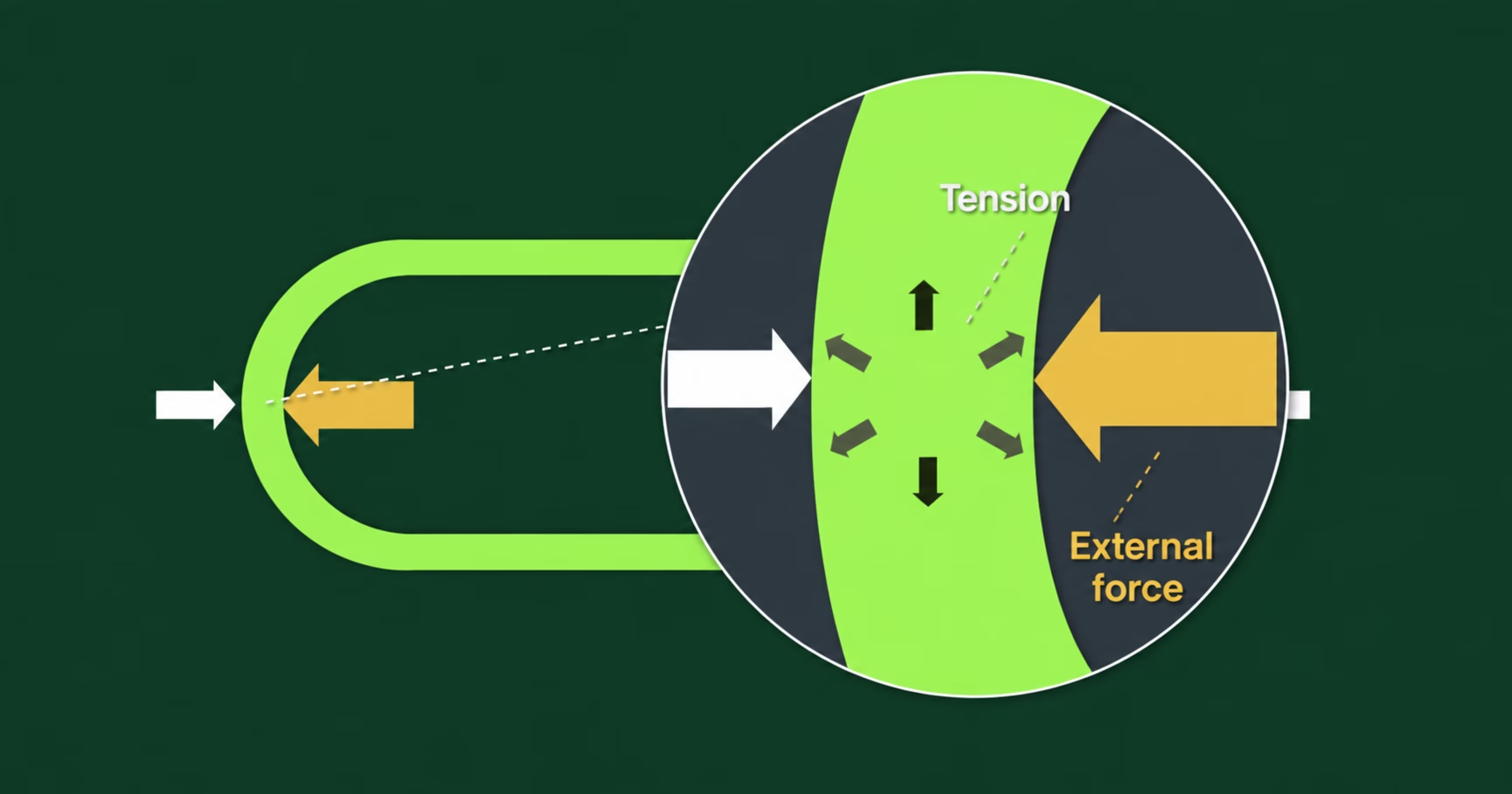
If the cross section were circular, its curvature would allow the tensile stress to resist the external force acting perpendicular to the surface. But a lighter has a rounded rectangular cross section. Along a flat area, the tensile stress runs perpendicular to that force, making the wall vulnerable. The container can bulge there and could even burst.
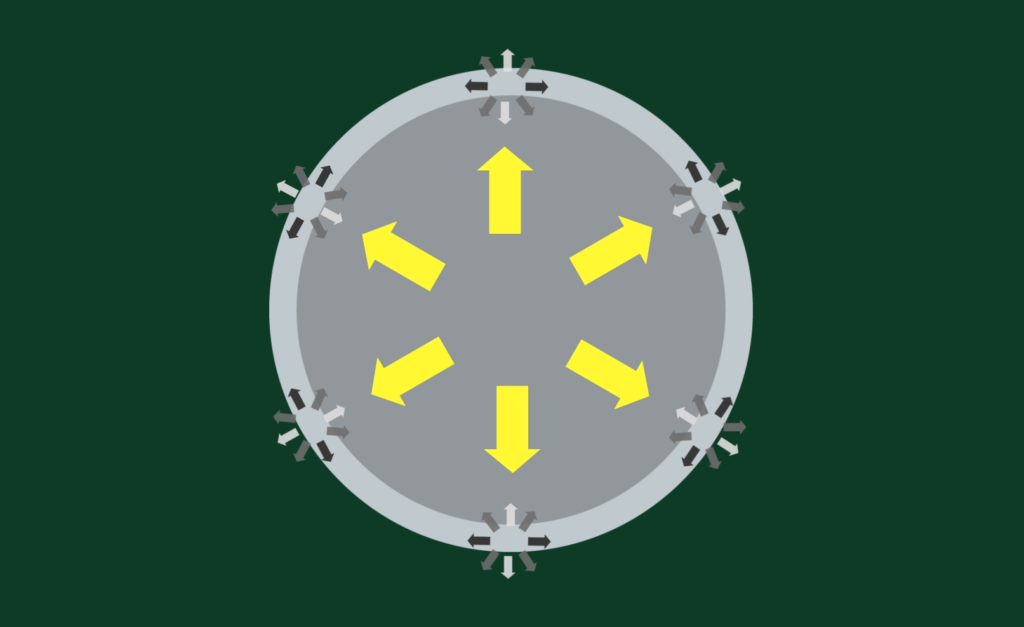
To prevent this, the lighter could be cylindrical, its container could be made thicker, or an internal structure could be fused into it. A cylinder or thicker wall would make the lighter less convenient to carry, so an internal structure was chosen. A small gap is left at the top to let liquid butane move between the sides, which may help explain the misunderstanding about its purpose.
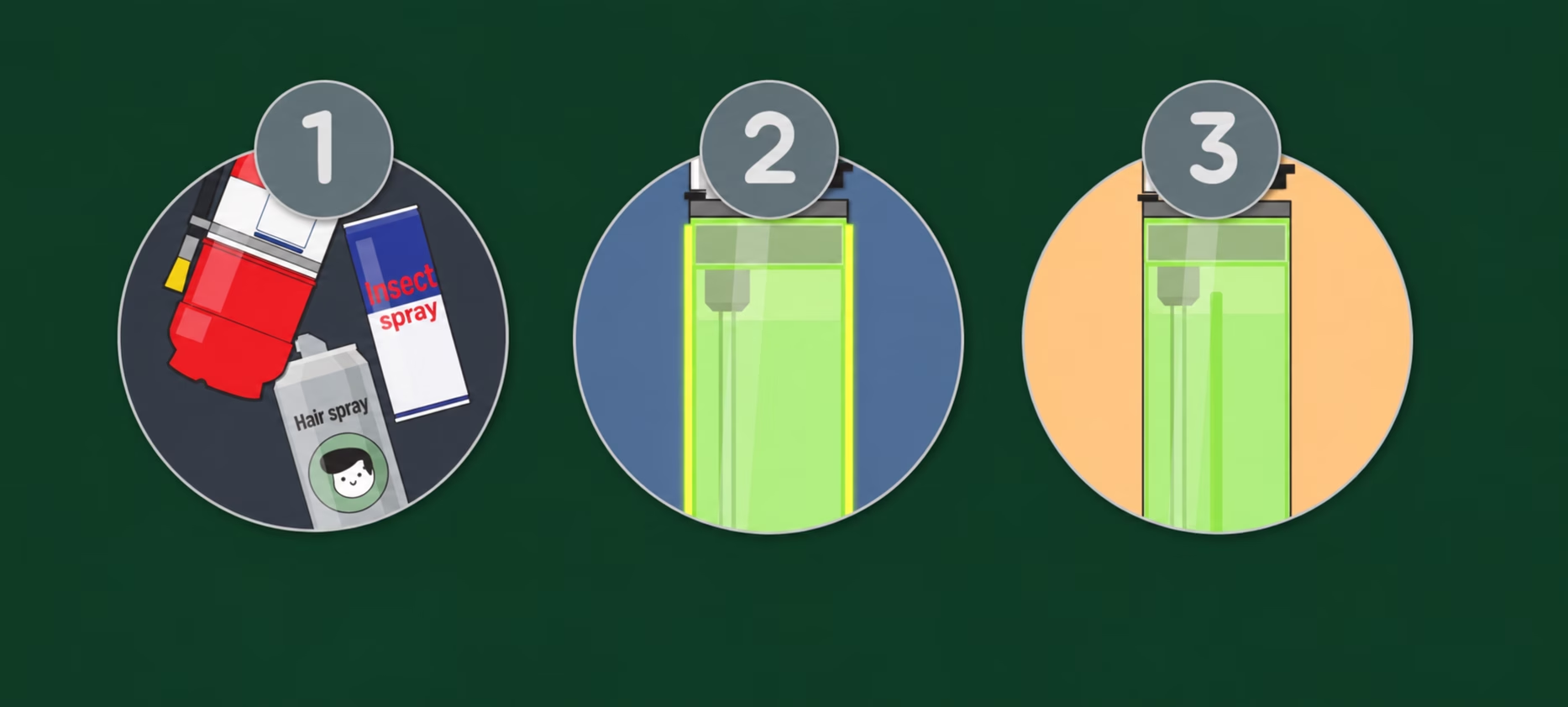
Comparing containers with and without reinforcement
We ran a simulation. The transparent container represents its original shape, and colors show how much it deforms when the internal pressure reaches 7 atmospheres. The container material is ABS PC. The maximum and minimum values on each scale differ, so each shape should be considered separately. Below are containers modeled on a real lighter.
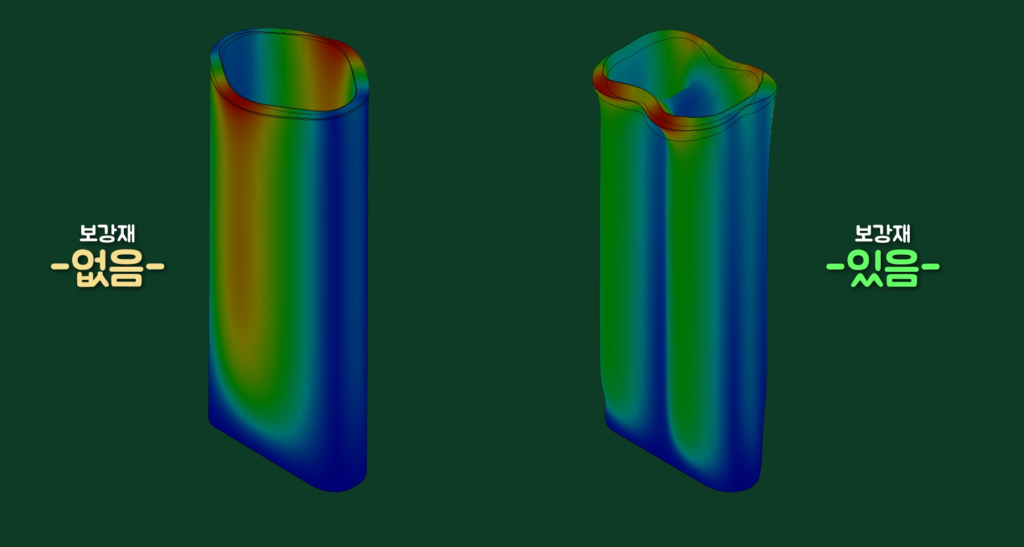 Without
reinforcementWith
reinforcement
Can you see the difference? Without reinforcement, the container bulges as though it might burst. With reinforcement, it expands only slightly.
Safety tests and container design
This does not mean a container without reinforcement will always burst. It may withstand room-temperature conditions, but a lighter sold in Korea must pass the safety certification standards presented by the Korean Agency for Technology and Standards.
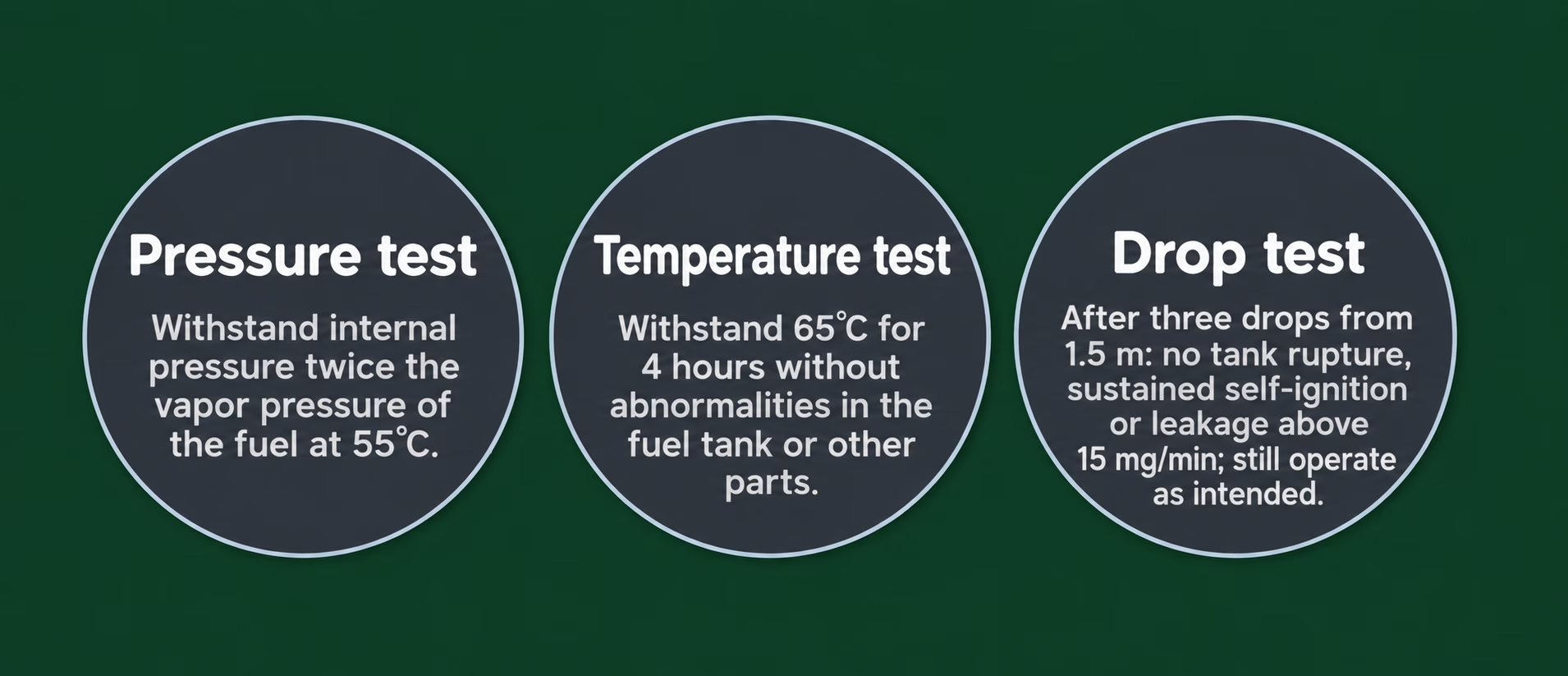
The tests are shown above. The additional structure is fused into the middle of the container to help it pass those tests. Thanks to that design, a lighter can be used more safely. Has that answered your question?
Script contribution: @두유카페라뗴, PhD student in Mechanical Engineering at Seoul National University
Copyright. 사물궁이 잡학지식. All rights reserved
More English articles · Read the original Korean article
Watch the original video below. For English subtitles, turn on captions (CC) and choose English (United States) in the player settings.