
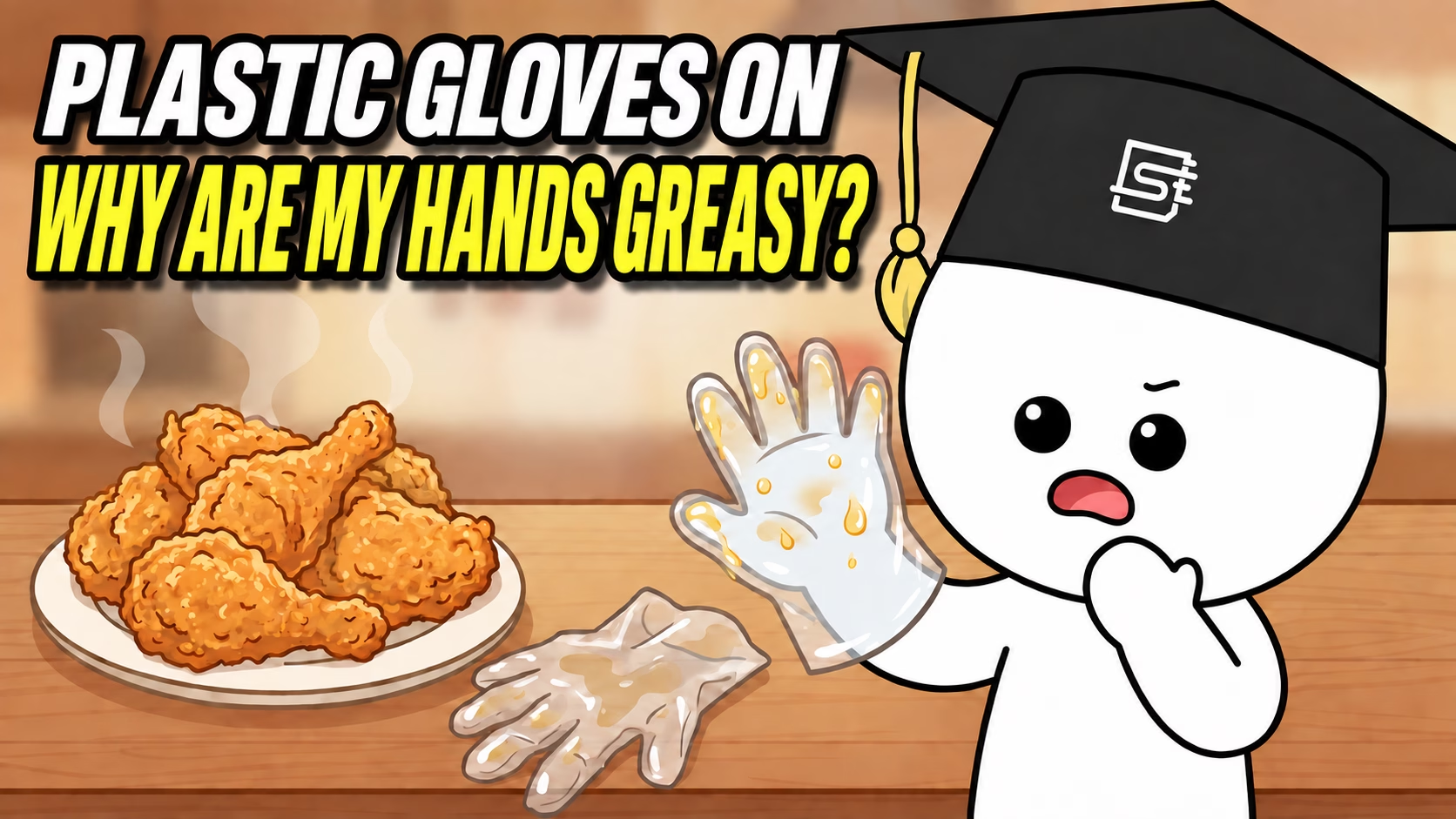
When eating fried chicken, you might use your bare hands or chopsticks, or put on disposable polyethylene gloves. But did you know your hands can still get greasy when you eat fried chicken with those gloves on?
I usually use chopsticks, so I had no idea until someone asked me about it. When I recently had fried chicken, I tried eating it with disposable gloves. Surprisingly, my hands still ended up oily.
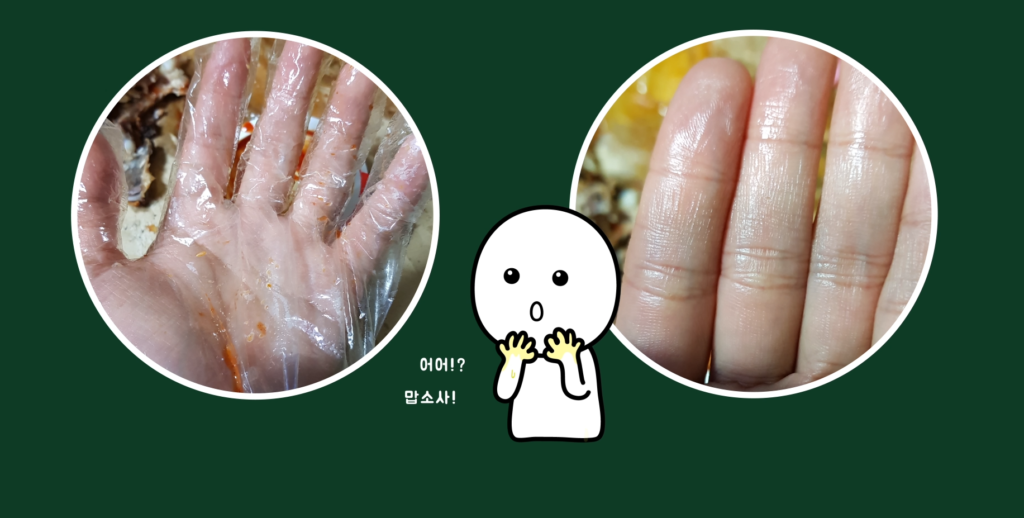 Oh!
Oh!Wow!
We wear disposable plastic gloves to keep things off our hands. That includes the sauce and oil on fried chicken, so if oil gets through, what is the point? Could the hot chicken have melted the gloves?
What disposable gloves are made of
These gloves are made from low-density polyethylene, or LDPE. Polyethylene production begins by separating naphtha from crude oil. Naphtha is a mixture of hydrocarbons collected over a boiling range of 35–220°C during distillation. It is then broken down to obtain ethylene, accounting for about 25%, and the ethylene is polymerized.
The resulting polyethylene is classified as high-density or low-density, depending on its density. Low-density polyethylene is used for disposable gloves, plastic bags and food wrap. High-density polyethylene is used for shopping bags, electrical wire coverings and milk containers.
Is the oil dissolving the glove?
At first, I suspected that the oil acted as an organic solvent and dissolved the polyethylene through hydrophobic interactions, because polyethylene is nonpolar. Polarity means the centers of positive and negative charge in a molecule do not coincide. An organic solvent is an organic substance that dissolves another substance.
But I could not find material supporting that explanation. Instead, I learned that low-density polyethylene is a polymer that does not dissolve easily.
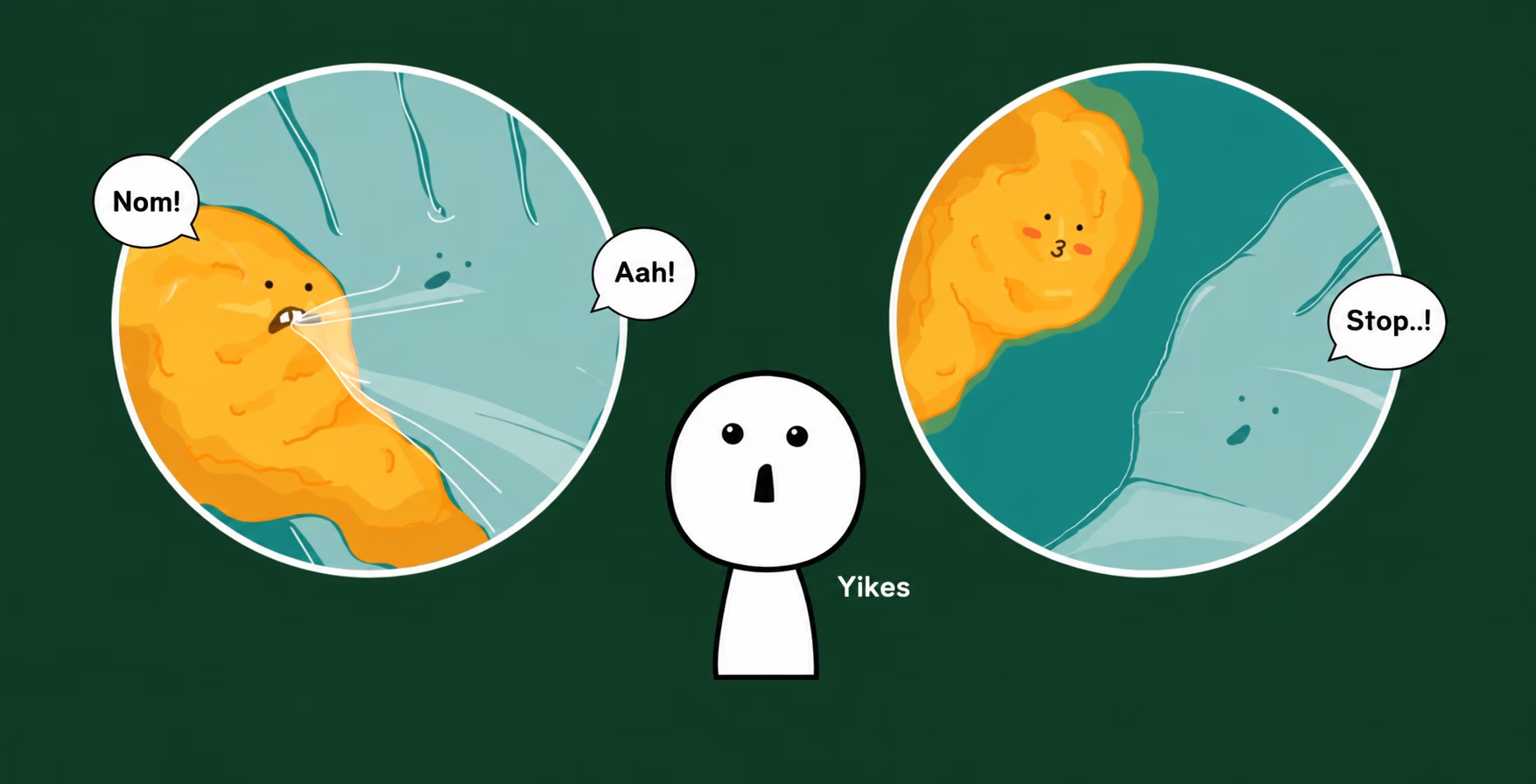
Oil can pass through polyethylene
After asking around in several places, I found the reason. It was simpler than expected: organic solvents can pass through polyethylene easily. Aqueous solutions—solutions in which water is the solvent—cannot pass through these gloves, but organic solvents can.

So when you eat chicken with these gloves, oil from the chicken can pass through and reach your hands, defeating their purpose. Thicker gloves or wearing two pairs work somewhat better. Sauces contain less oil, so the gloves can still be useful for eating sauced chicken.
 Try two gloves!Oh no…My hand is oily!
This is something people working in laboratories need to know. Wearing polyethylene gloves to protect your hands from chemicals during an experiment can lead to trouble. The original explanation calls for synthetic rubber gloves when doing experiments.
Why food wrap warns against contact with oily foods
That explains the gloves. But packaging for food wrap made from low-density polyethylene carries a warning to avoid direct contact with foods high in fat or oil. That wording was what first made me suspect dissolution. Why does it warn against contact?
Precautions for use
Take care around the serrated cutting blade. When using the wrap with foods high in fat, keep the food and wrap from touching directly. Remove the blade before sorting the empty box for recycling.
Be careful not to injure your hands on the cutting blade.
Precautions printed on the food-wrap packaging shown in the original article
Using it is not itself the issue. Oil, an organic solvent, can pass through the wrap. Since wrap is mainly used to package food, leaving it for a long time after oil has seeped through can make the food more likely to spoil.
The wrap can also melt in a microwave. Oil that has passed through it can reach a higher temperature during heating and melt the wrap. Additives such as plasticizers may then be released, and foreign substances attached to the product could also melt and be absorbed into the food. That is the reason for the warning. Has that answered your question?
Copyright. 사물궁이 잡학지식. All rights reserved
More English articles · Read the original Korean article
Watch the original video below. For English subtitles, turn on captions (CC) and choose English (United States) in the player settings.