

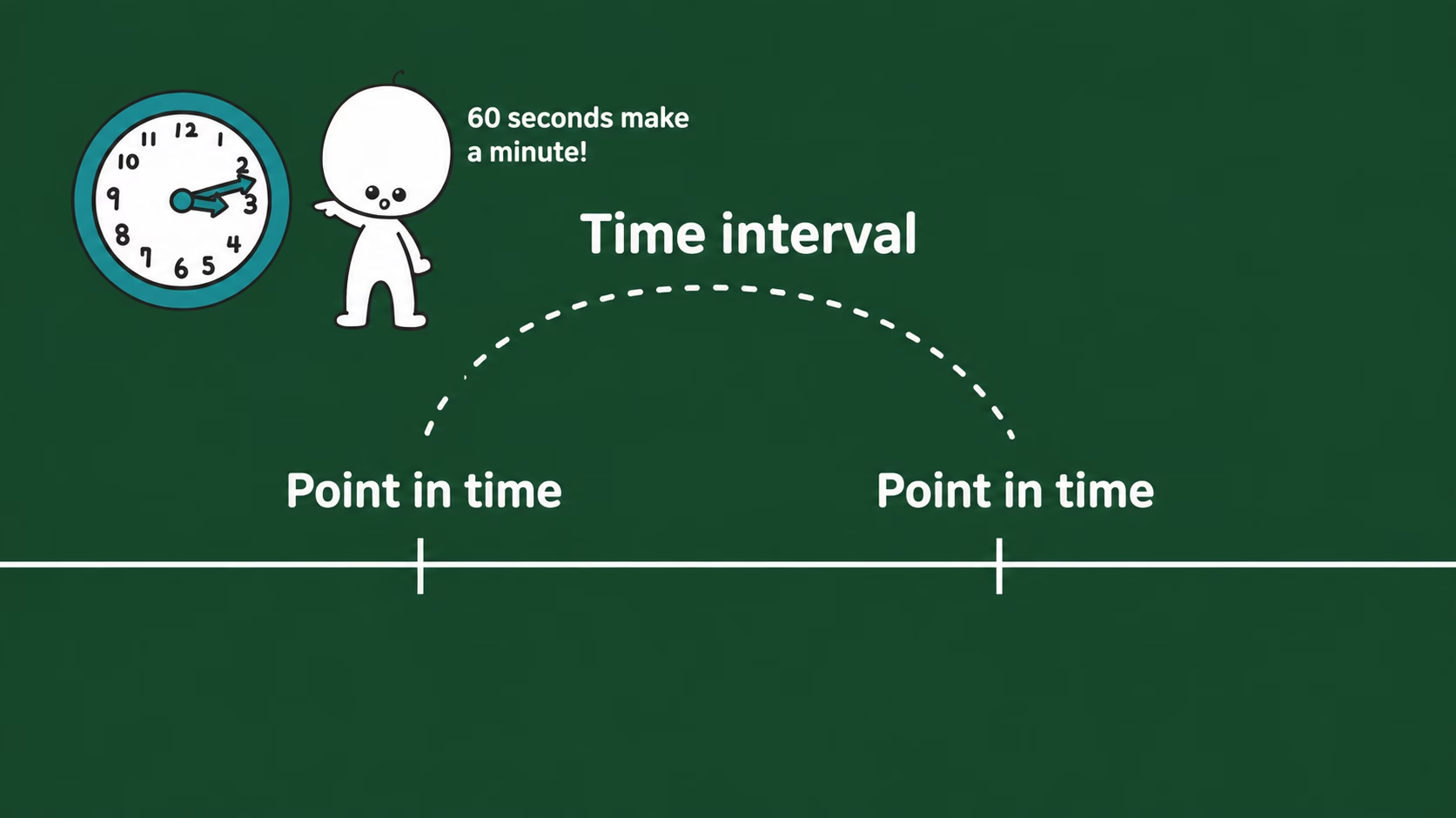
A moment is a particular point in time, while a duration is the interval between two moments. Through shared conventions, we have defined units such as seconds, minutes, days and years. Unless someone is moving close to the speed of light, we can consider time to pass at the same rate for everyone.
Dreams, REM sleep and eye movements
But does time pass at the same rate in dreams as it does in waking life? A dream is an experience of images, sounds, thoughts, emotions or other sensations during sleep, separate from external reality. Sleep is not simply a switch between sleeping and waking; it follows a cycle with distinct stages.
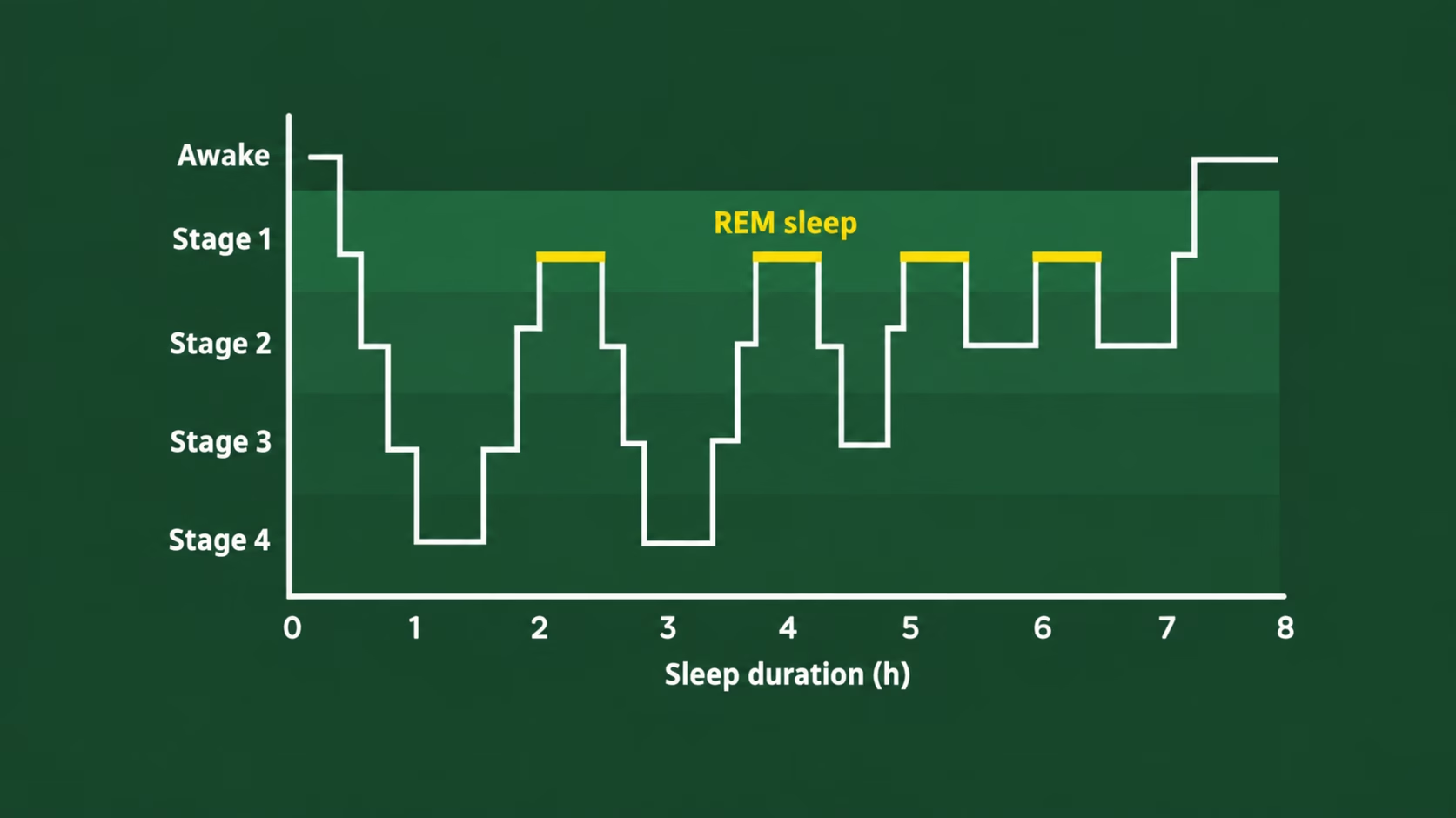
Dreaming is associated with the stage called REM sleep. During this stage, signals from the brain to the muscles are blocked and most muscles relax, so people rarely act out what happens in their dreams.
Without this barrier, dream movements could put a person in danger. The condition in which this happens is called REM sleep behavior disorder. Not all movement is blocked, however: the muscles controlling the eyes can still move them behind closed eyelids. These rapid eye movements give REM sleep its name.

Using lucid dreams to measure dream time
Although dream events are usually unrealistic, we generally do not recognize them as dreams. Occasionally, however, we become aware that we are dreaming. This is called a lucid dream. People who can deliberately experience this state are known as lucid dreamers.

Scientists have tried to measure the passage of time in dreams with the help of lucid dreamers. Because dreams occur during REM sleep, and the eye muscles are still active, signals from those muscles can be used to compare dream time with waking time.
An experiment comparing counting, walking and gymnastics
In a 2013 experiment, Daniel Erlacher’s research team studied 21 lucid dreamers. The first task was counting. While lucid dreaming, participants moved their eyes, counted from 1 to 10, 1 to 20 or 1 to 30, then moved their eyes again.
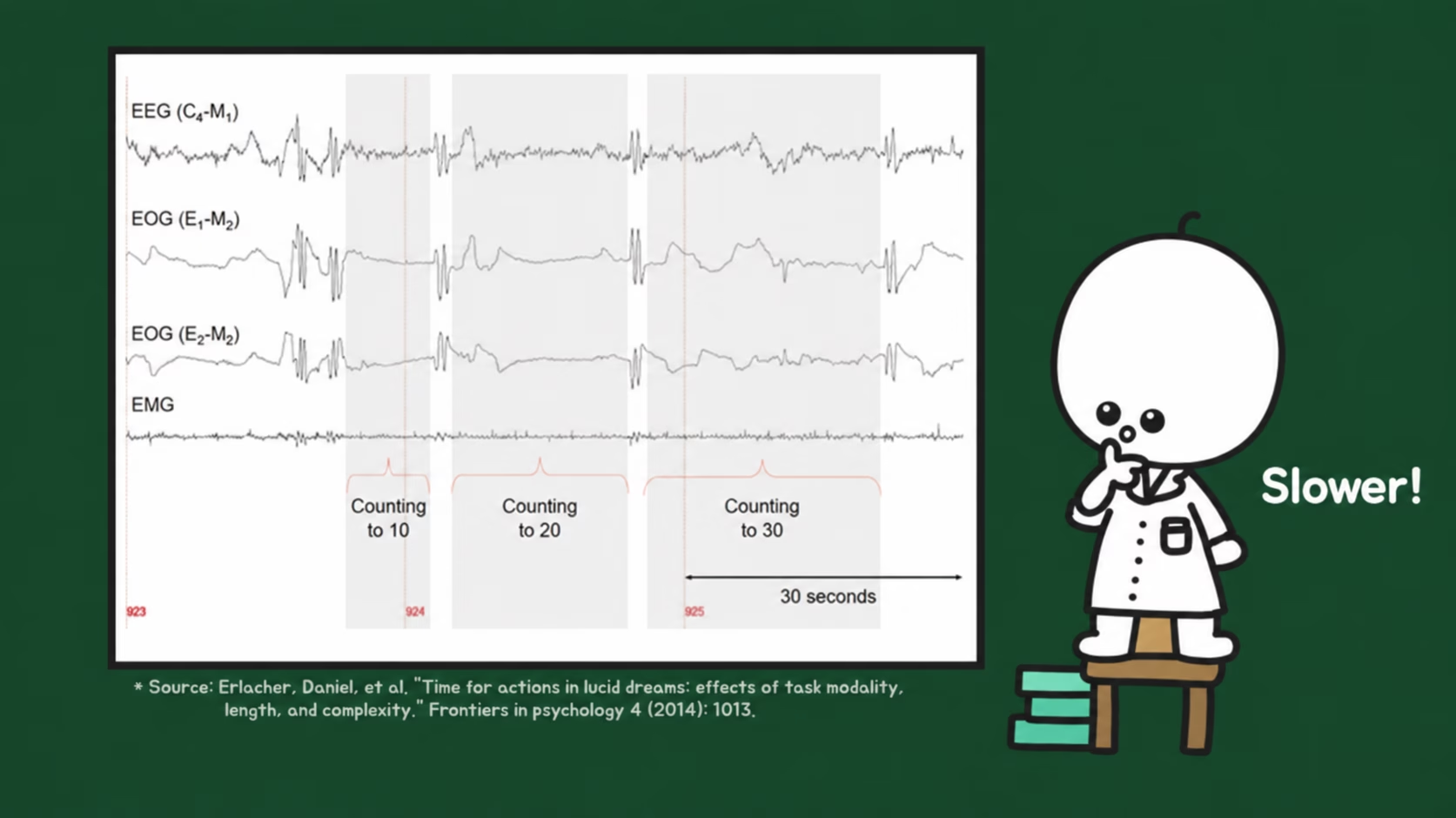
The graph above records signals from the eye muscles. The squiggles in the white areas show eye movements. Counting in dreams was about 30% slower than counting while awake.
The second task used the same method to measure walking 10, 20 or 30 steps. Walking in dreams was about 50% slower. The third task was a simple gymnastic movement that took about six seconds while awake. In dreams, it was about 20% slower.
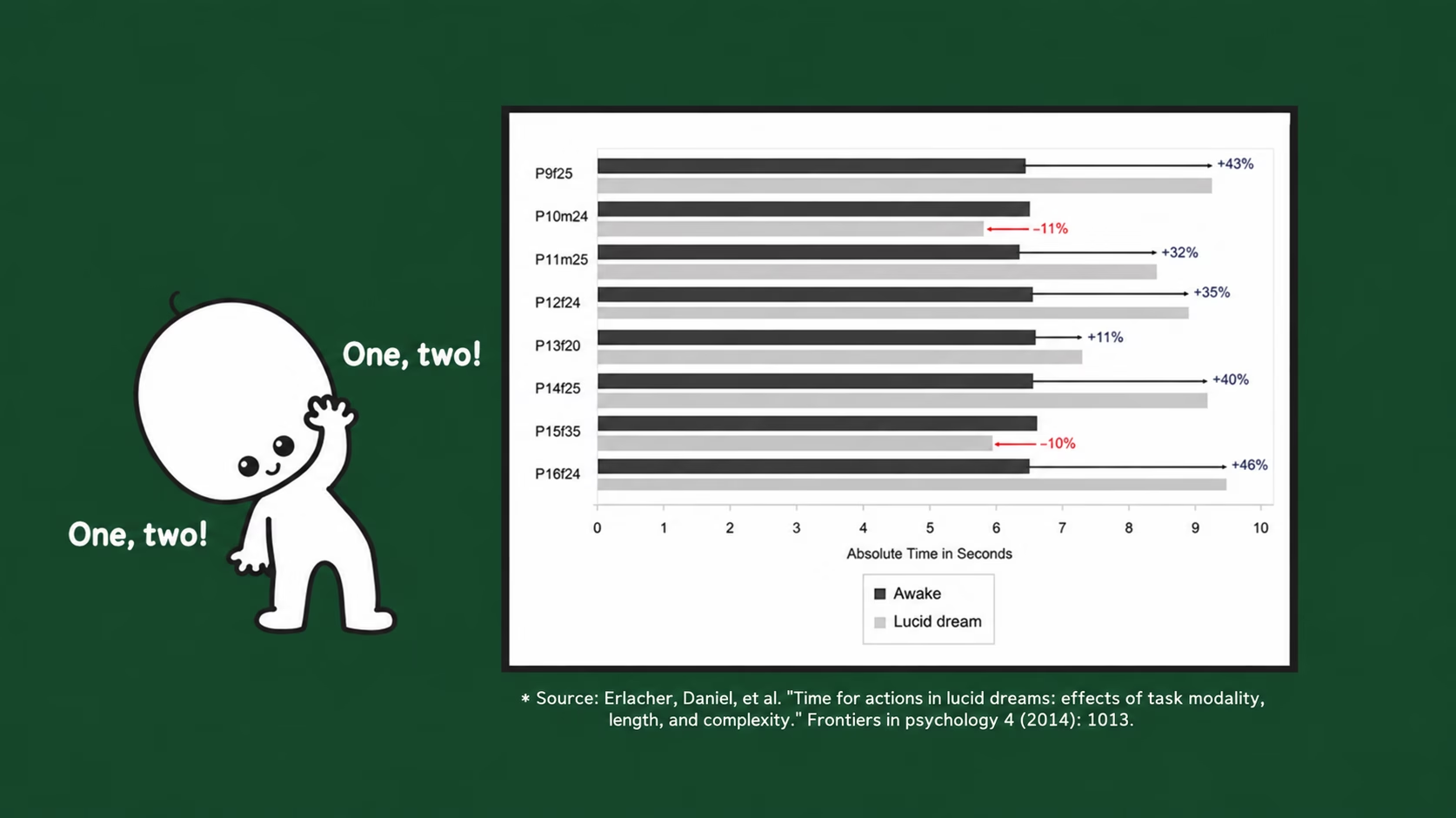
These findings allowed the researchers to estimate that time in dreams passes roughly 20–50% more slowly than in waking life. An animal experiment found a similar pattern.
Neural signals during animal sleep
In 2001, Matthew Wilson’s team trained rats to perform a particular behavior, then observed their brain signals during sleep. During REM sleep, they found that neural signals corresponding to that behavior were replayed in the hippocampus, a brain region involved in memory.
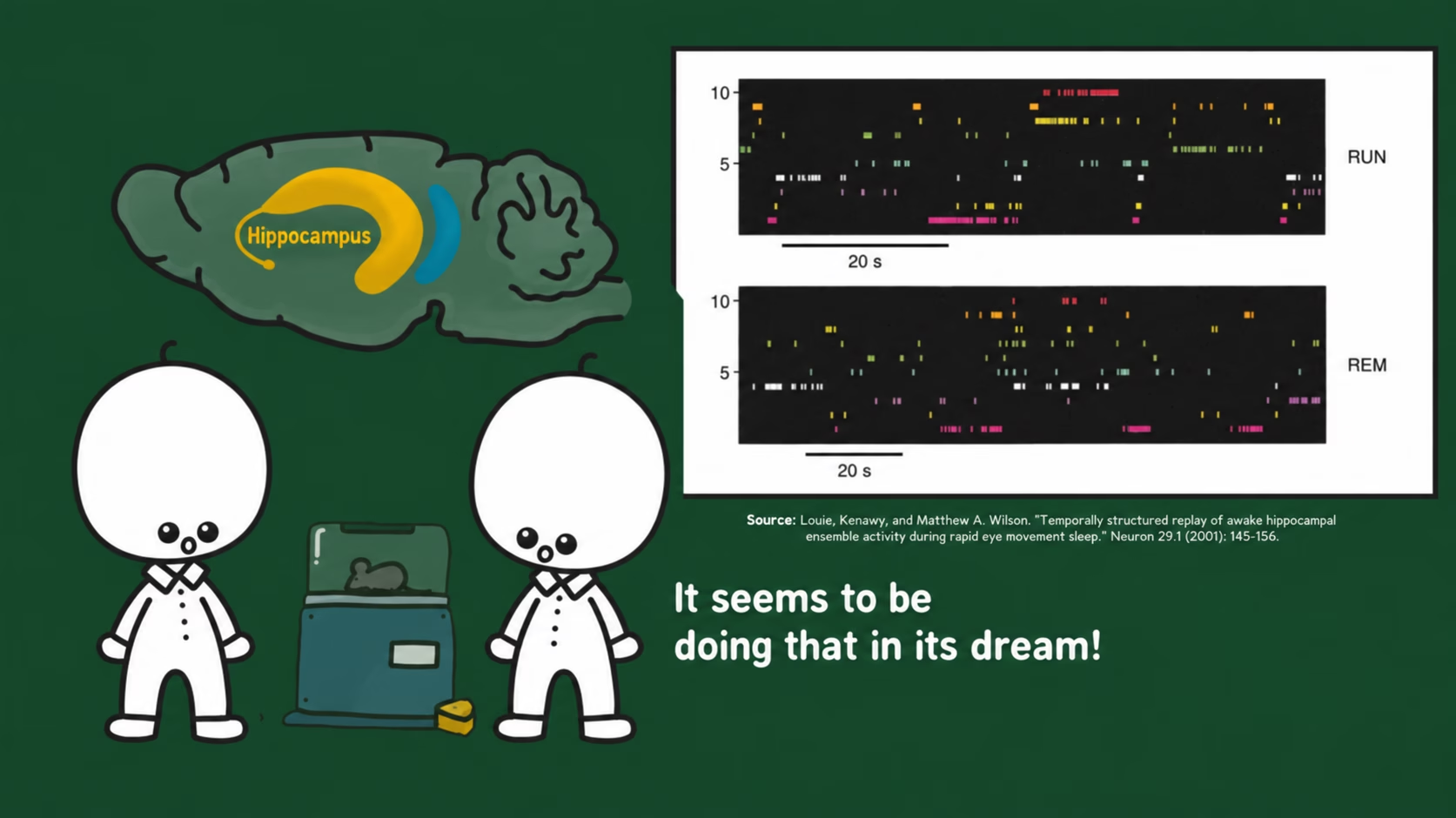
Those signals replayed about 40% more slowly, on average, than during the waking behavior. This provided indirect evidence that time passes more slowly in dreams.
Our sense of time changes even while awake
In fact, our experience of time can vary considerably while we are awake too. When we concentrate on something, time seems to fly. By contrast, taking certain drugs such as marijuana, or experiencing depression, can make time seem to pass slowly.

These differences reflect changes in brain activity. Human perception of time can vary just as much in waking life as in dreams. The feeling that time slows down during an emergency is also said to result from hormone release greatly increasing the amount of information the brain processes. Has that answered your question?
– Script contributed by Hyunwoo Jang, a graduate of KAIST’s Department of Bio and Brain Engineering who researches the science of consciousness.
Copyright. 사물궁이 잡학지식. All rights reserved
Read the original Korean article · More articles in English
Watch the original Samulgoongi video below. Turn on CC, then choose English (United States) under Settings → Subtitles/CC.