Rock paper scissors is a game in which two or more people simultaneously make a shape with their fingers, then decide who wins according to a set of rules. It is often used to decide an order, divide responsibilities or give someone first choice over what to do.
The rules and the apparent odds
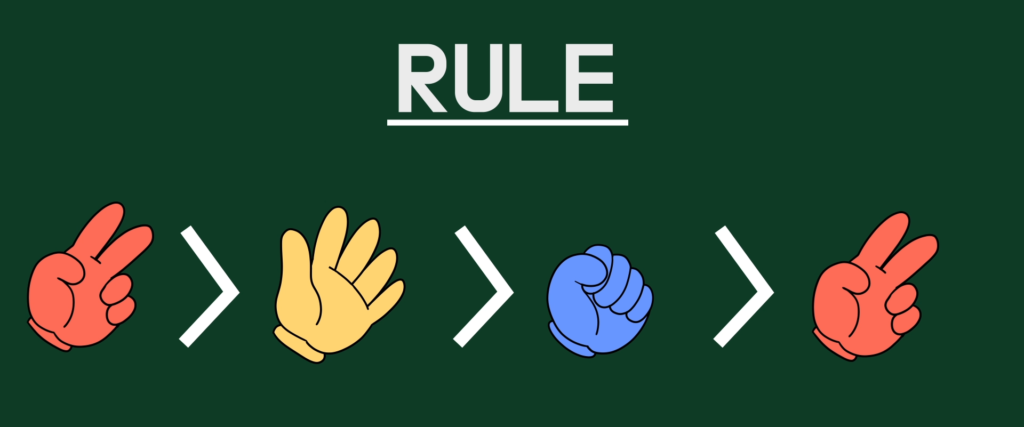
People use it to make decisions because it seems simple and fair. Scissors beat paper, paper beats rock, and rock beats scissors—the very choice that beats paper. The relationship forms a cycle, rather like a food chain.
Each player has three choices and can make only one. The probabilities of winning, losing and drawing are therefore often described as equal: about 33.33%, or one-third each. That is why people consider the game fair.
Does the law of large numbers settle the question?
If you ask someone to play nine rounds, they will not necessarily choose rock, paper and scissors exactly three times each. Yet people still talk about a 33.33% probability because of the law of large numbers.

Our immediate experience may not match those odds, but mathematically, as the sample size—in this case, the number of rounds—grows, the result approaches 33.33%. People therefore still call the game fair.
But is it really that simple? For that argument to hold, there must not be another factor changing the outcome. In rock paper scissors, that factor is the human player. You might think that makes no difference because everyone still has the same three choices. What if the outcome of one round affects the next?
What people actually choose
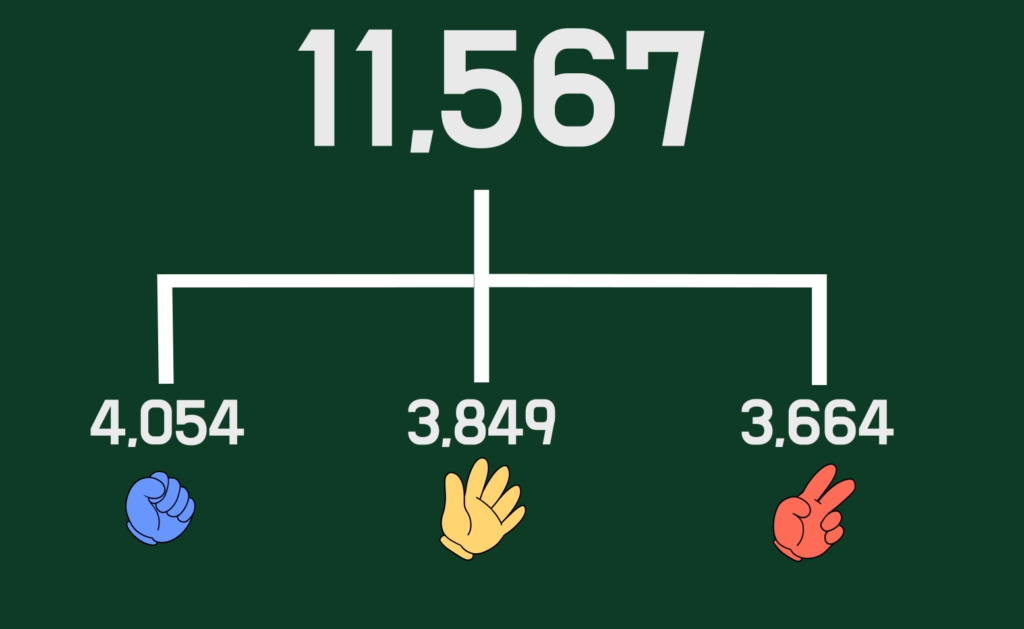
Professor Mitsuo Yoshizawa of J. F. Oberlin University in Japan analyzed data from 11,567 rounds played by 725 students. Rock appeared 4,054 times, paper 3,849 times and scissors 3,664 times. Based on those results, if you do not know what to choose, paper gives you a lower chance of losing.
The explanations offered for the difference were that scissors is relatively difficult to form, and that people instinctively clench their fists when tense. A competitive moment brings tension, making rock more likely than scissors.
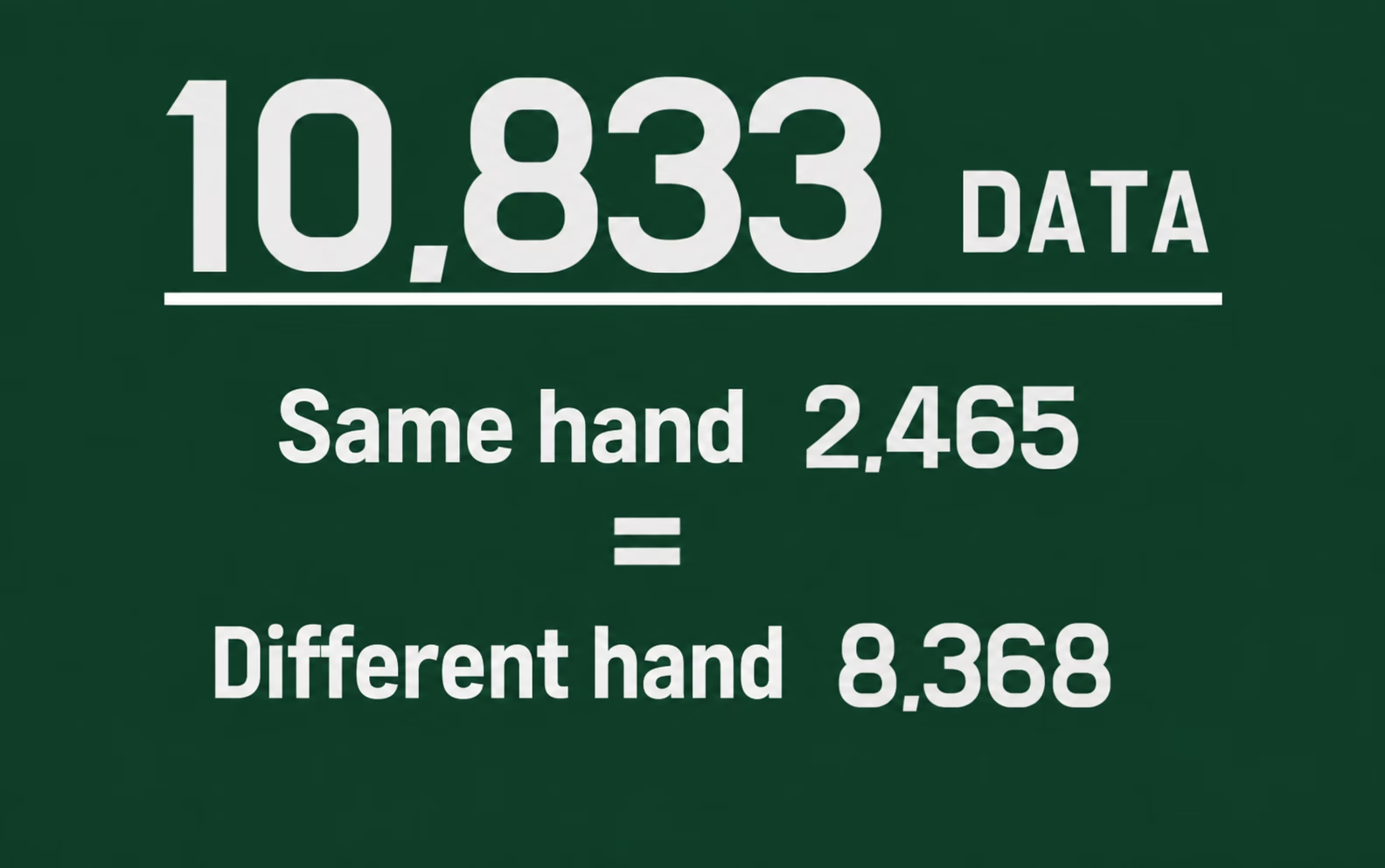
The analysis also examined how one round affects the next. In 10,833 observations, players repeated the same hand 2,465 times. People were therefore more likely to switch to something different from their previous choice.
How winning or losing affects the next choice
Another study adds to this picture. A joint research team of psychologists at Zhejiang University in China conducted an experiment with 360 students. The researchers divided the students into six groups and had them play rock paper scissors with randomly assigned opponents. Small cash rewards were given for wins to encourage active participation.
The resulting data showed that winners often repeated their winning hand in the next round. Players who lost twice in a row using the same hand often switched to the choice that could beat what their opponent had played.
Playing against a computer
There is another study supporting this pattern. A team led by Dr. Benjamin James Dyson programmed a computer to choose randomly while giving rock, paper and scissors equal frequencies—25 out of 75 rounds each.
Thirty-one students at the University of Sussex played against this computer in three blocks of 75 rounds, totaling 225 rounds per student. Analysis of the data showed that people generally chose rock more often.
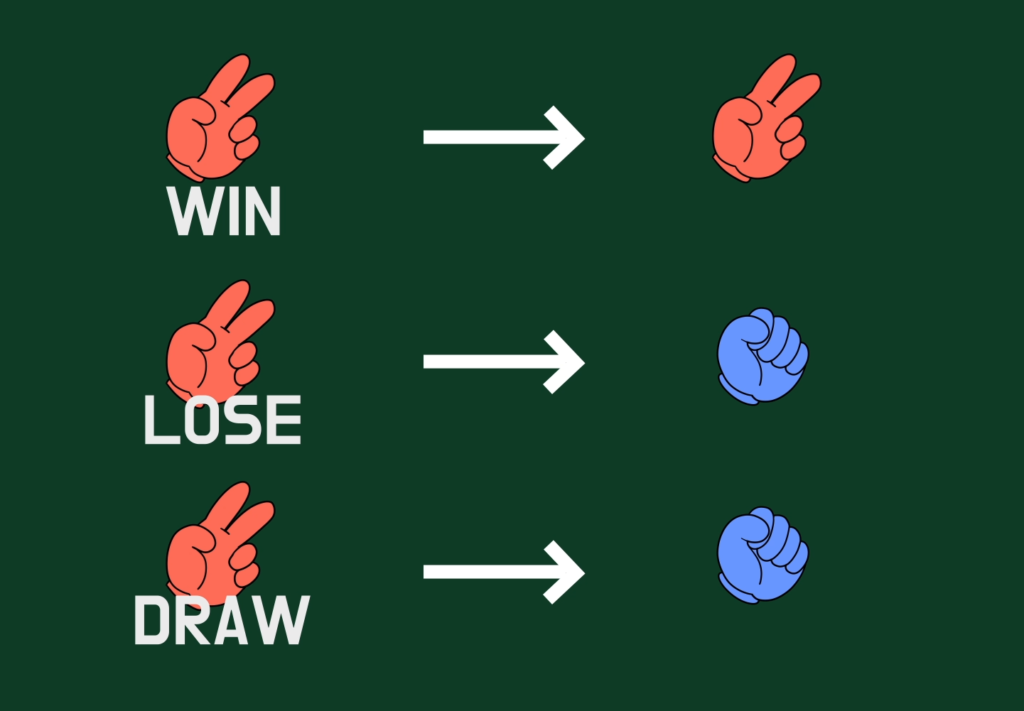
After winning, players often repeated the same choice. After losing, they often switched to a hand that would beat the one they themselves had just lost with. After a draw, they also often chose the hand that would beat their own previous choice.
The pattern across several studies
Statistics reported by the World RPS Society likewise put scissors at 29.6%, with rock and paper chosen relatively more often. The organization therefore suggested choosing paper to improve the chance of winning.
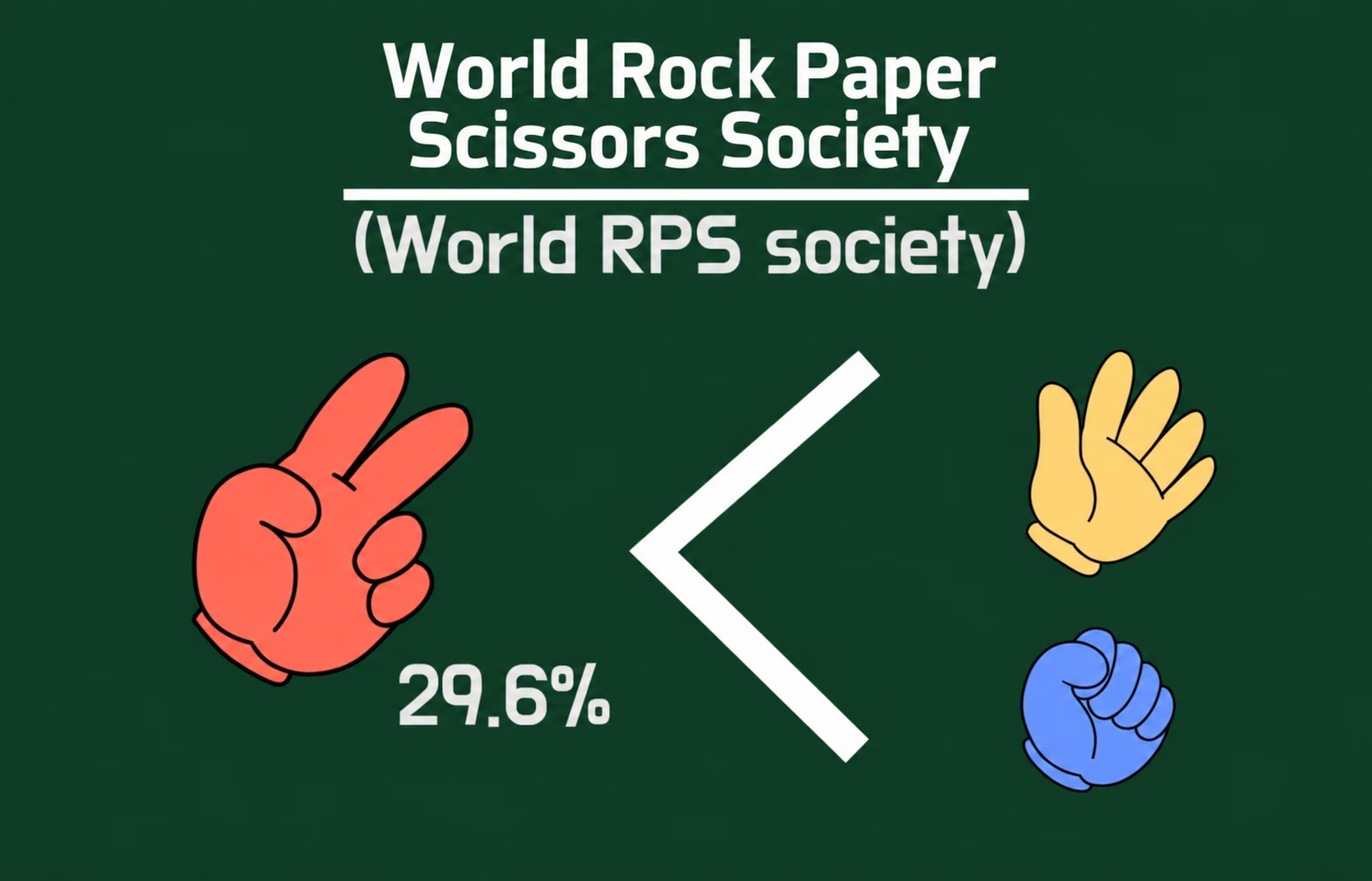
Across these studies, the findings are broadly similar: paper tends to offer a better chance of winning, and the result of one round affects the next. In other words, we cannot simply say that the chance of winning rock paper scissors is exactly 33.33%. Has that answered your question?
Copyright. 사물궁이 잡학지식. All rights reserved
Read the original Korean article · More articles in English
Watch the original Samulgoongi video below. Turn on CC, then choose English (United States) under Settings → Subtitles/CC.