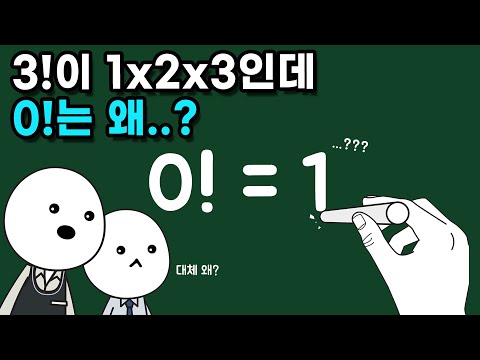
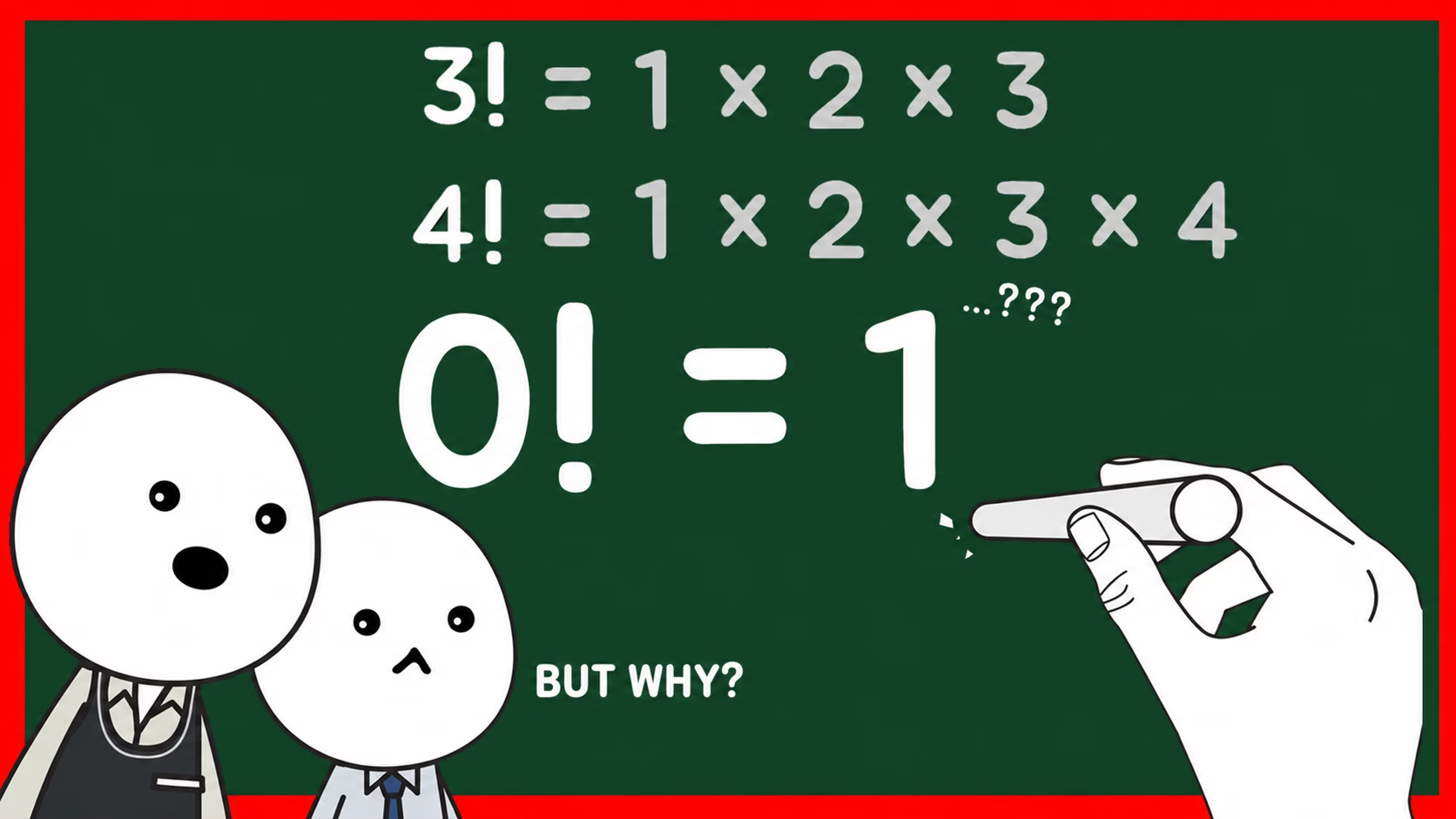
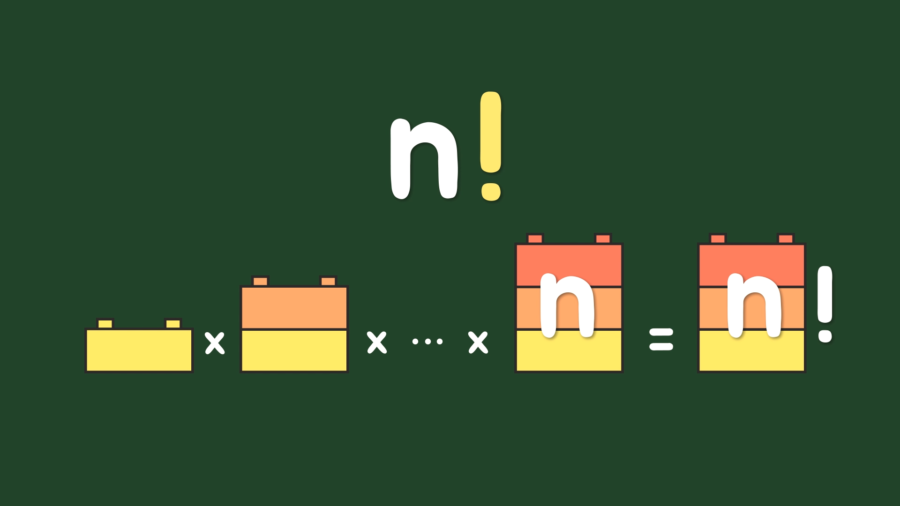
The factorial of a natural number—a positive integer—is written with an exclamation mark (!). For a positive integer n, the product of all the integers from 1 through n is called n!.
For example, 3! = 1 × 2 × 3 = 6, and 4! = 1 × 2 × 3 × 4 = 24. With this definition, it might seem that 0! should be 0. Yet we learn that 0! equals 1. Why?
Using the factorial rule to see why 0! = 1
We can see why using a property of factorials. Multiplying 3! by 4 gives 4!. Written as an equation, this is 4 × 3! = 4!. Dividing both sides by 4 gives 3! = 4! ÷ 4.
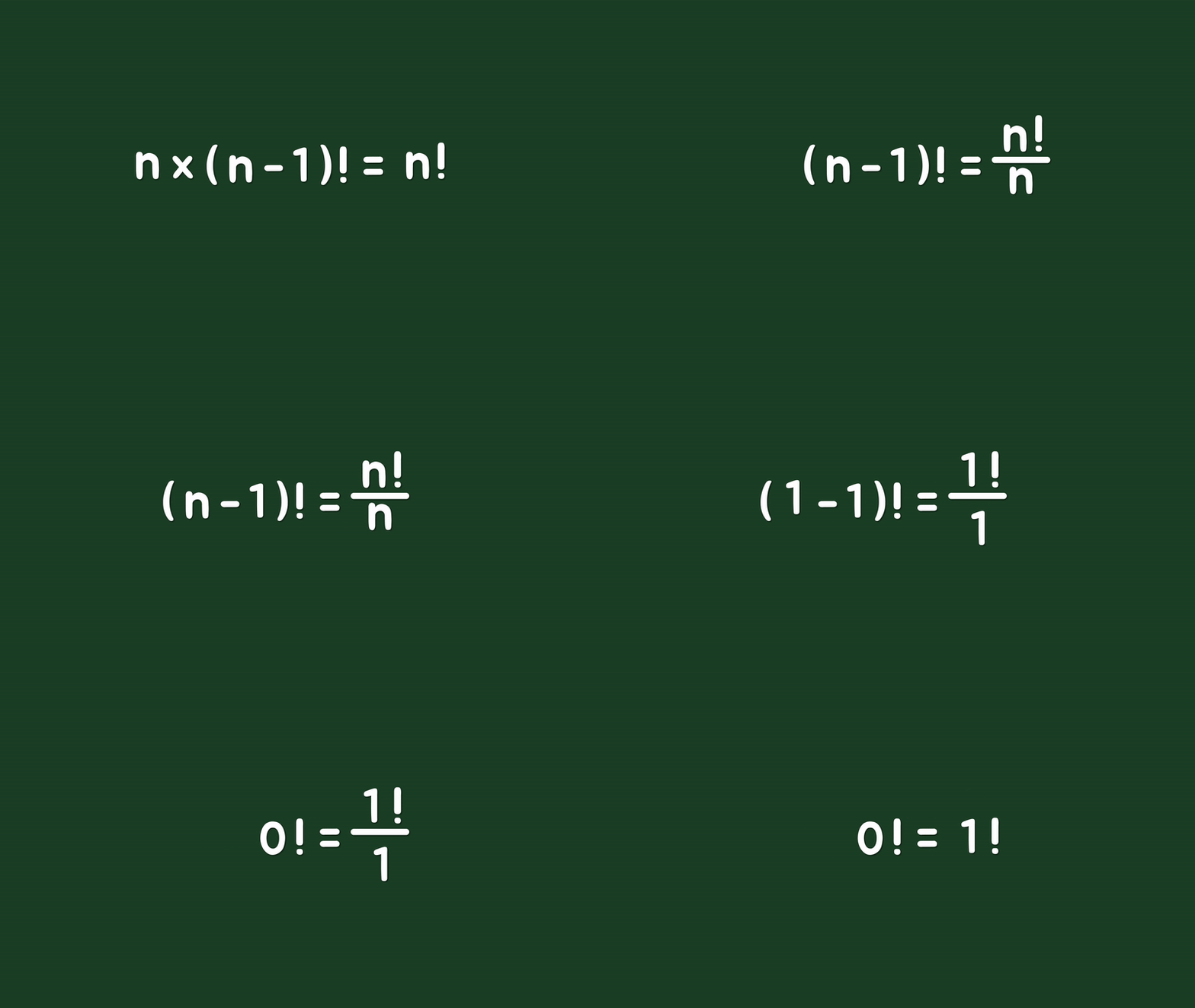
For a positive integer n, the same logic gives n × (n − 1)! = n!. Dividing by n, we get (n − 1)! = n! ÷ n. Now substitute 1 for n: 0! = 1! ÷ 1. By definition, 1! is 1, so we obtain 0! = 1.
Why zero factorial is one in the combinations formula
Another way to see this is through the formula for combinations. This concept comes up when counting possibilities, and it is used when the order of selection does not matter. For example, choosing r objects from n objects is written as nCr, and the formula below gives the number of ways to do so.
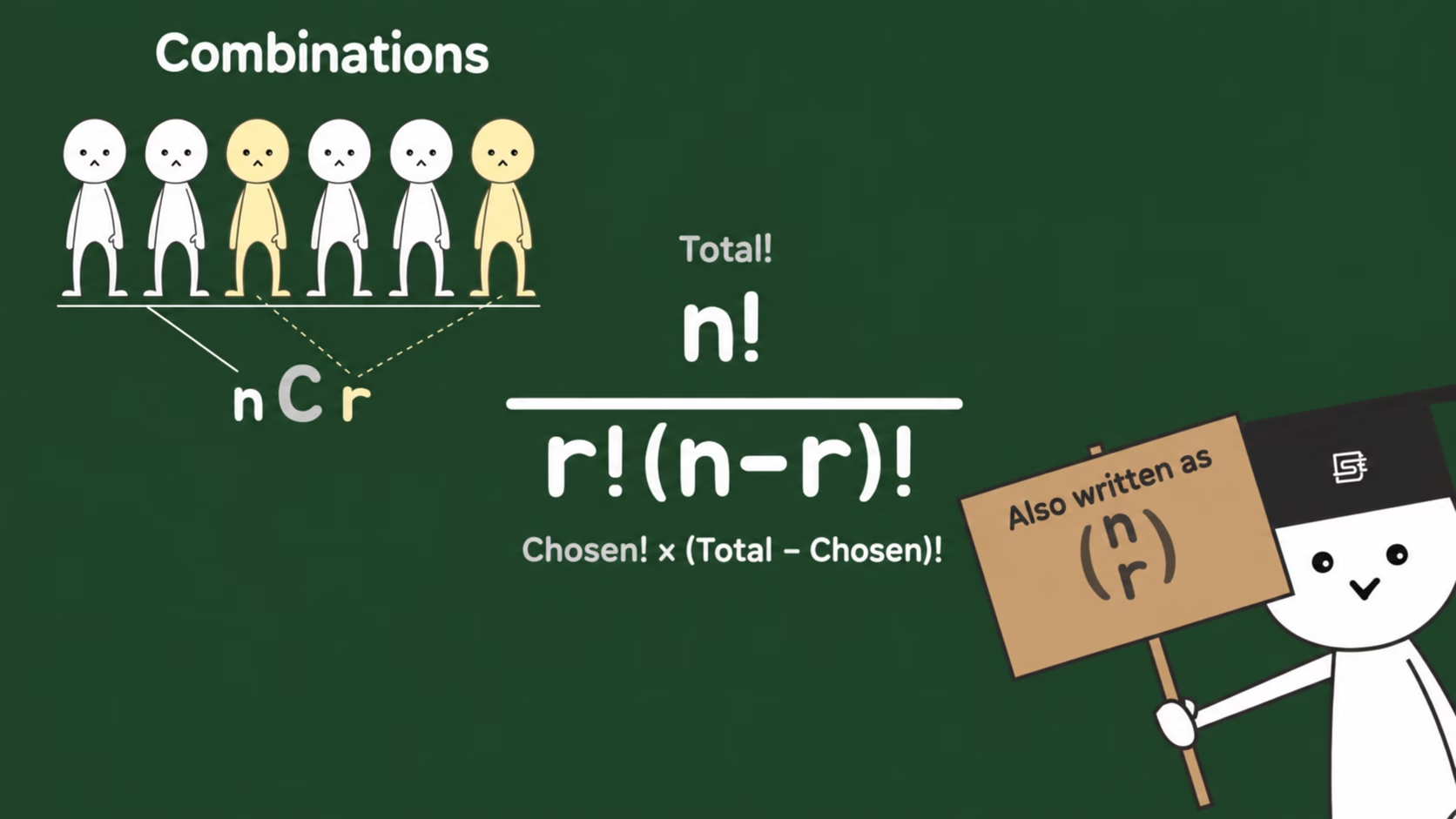
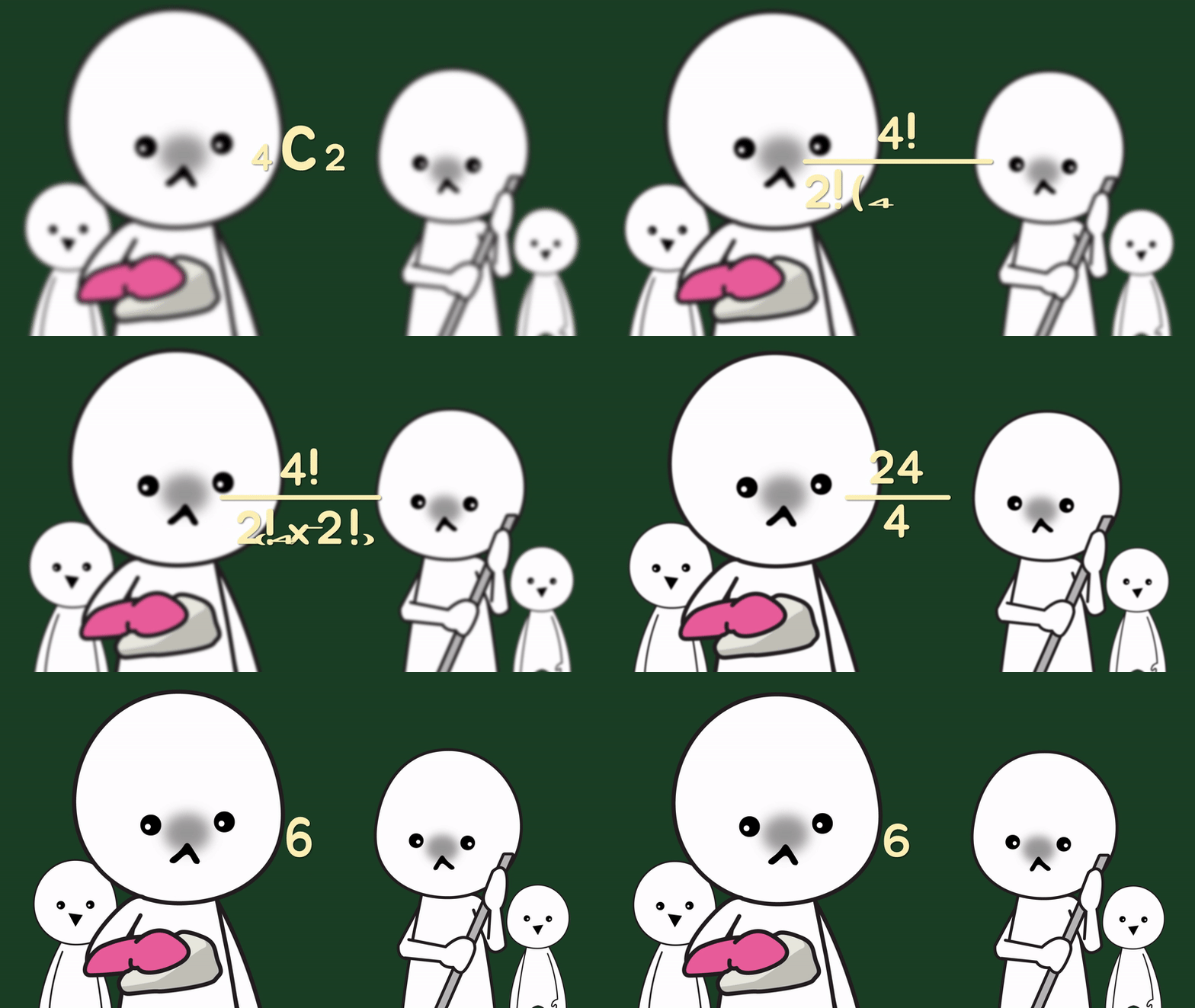
The formula alone may be confusing, so consider choosing two objects out of four. We write this as ₄C₂ and calculate it as follows: 4! ÷ (2! × 2!) = 6.
Likewise, choosing four objects out of four is written as ₄C₄. There is obviously only one possible selection, so the answer is 1.
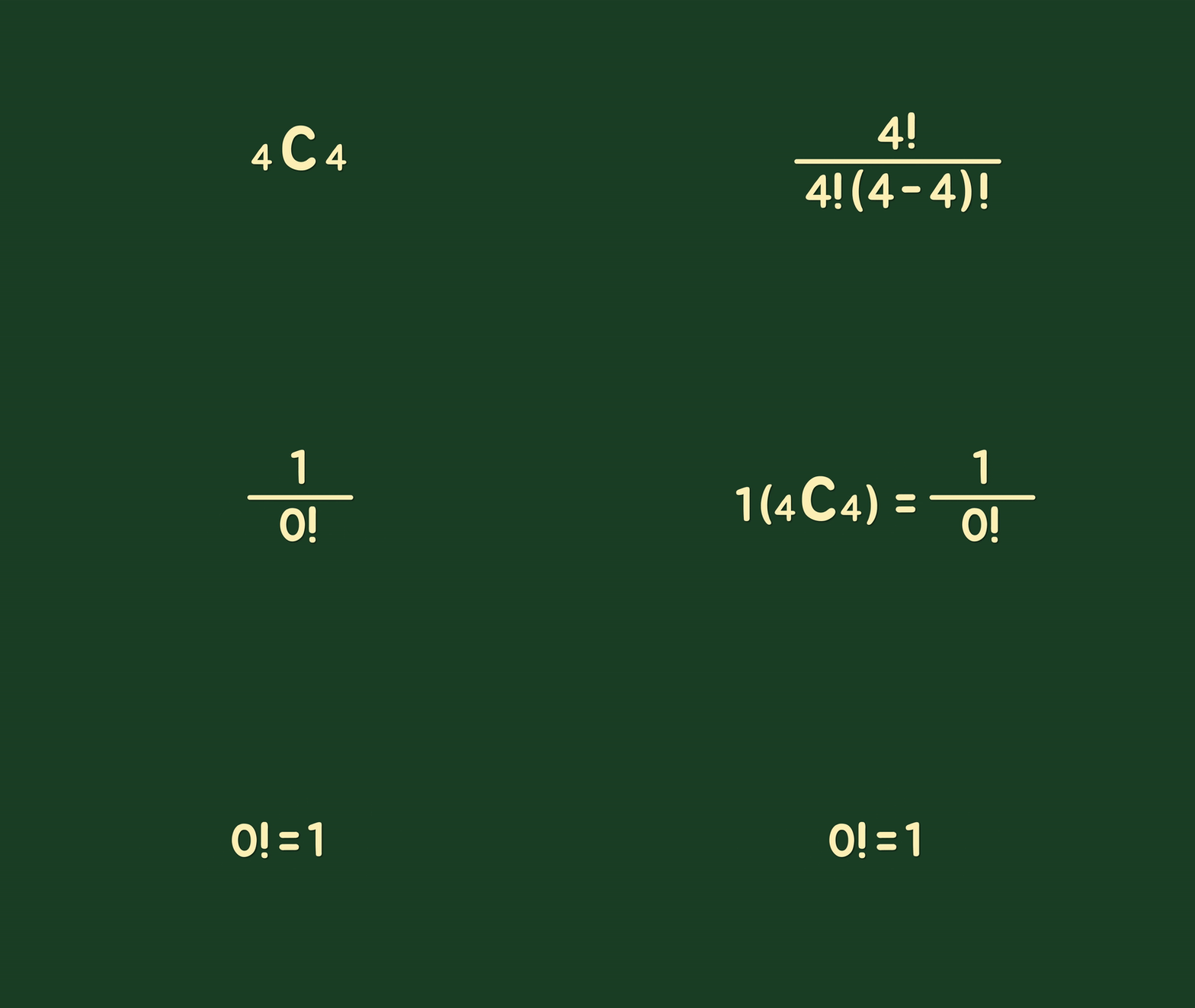
Writing that obvious result with the formula gives ₄C₄ = 4! ÷ (4! × 0!). Dividing the numerator and denominator by 4! gives 1 = 1 ÷ 0!. Rearranging, we obtain 0! = 1.
In other words, zero factorial is one. There are various reasons for defining it this way, but we can say that it fits the properties of factorials and allows formulas involving factorials to work as intended.
Extending factorials: the gamma function
Can factorials only be defined for zero and positive integers? That is not the case. The original explanation describes how the 18th-century Swiss mathematician Euler extended factorials to other numbers through the gamma function.
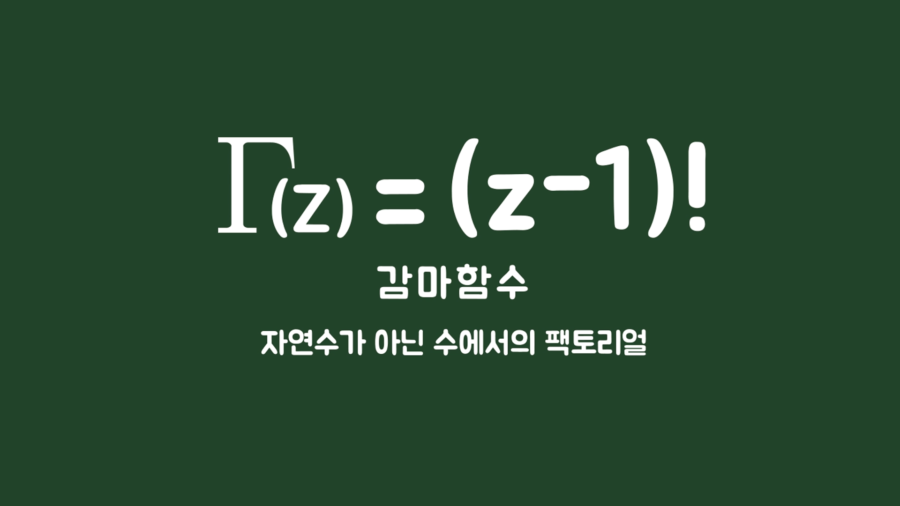 Gamma functionFactorials beyond the natural numbers
These extended values are not used for counting possibilities, but the function is widely used in calculus, differential equations, complex analysis, statistics, number theory and other mathematical fields. Has that answered your question?
Script contribution: Lee Seong-min, a doctoral student in theoretical mathematics at the University of Illinois at Chicago
Copyright. 사물궁이 잡학지식. All rights reserved
More English articles · Read the original Korean article
Watch the original video below. For English subtitles, turn on captions (CC) and choose English (United States) in the player settings.