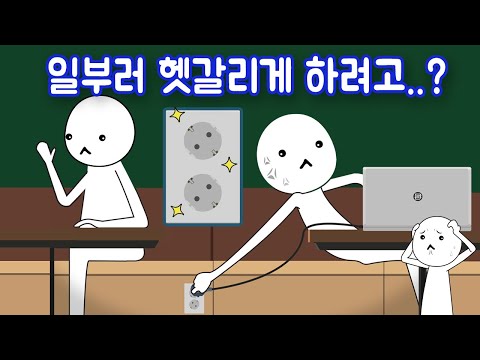
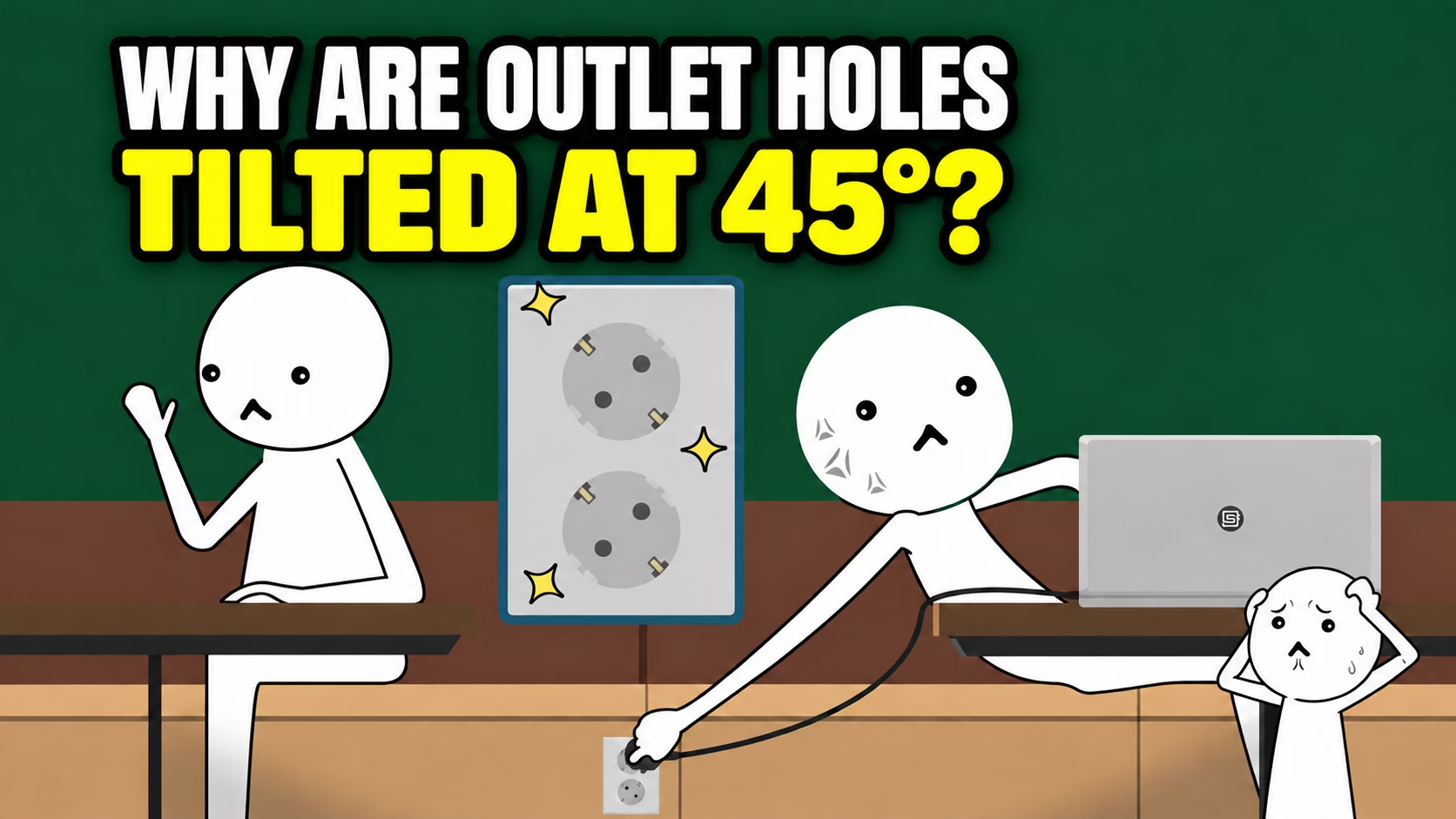
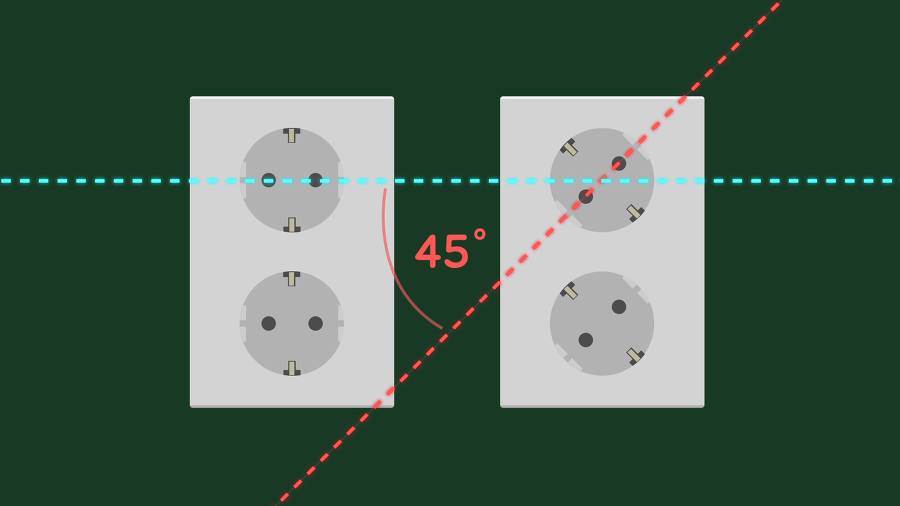
To use an electrical appliance, you need to plug it into an outlet. But on the two-socket wall outlets commonly seen in Korea, the holes are tilted at 45 degrees rather than lined up horizontally. Try inserting a plug without checking their orientation, and you may spend a while fumbling around.
Why try without looking? Outlets are often low down. Bending over to check the holes can be a nuisance, so you reach down with one hand and try to find them by feel. This raises a question: why are the holes tilted at 45 degrees instead of sitting side by side?
What do ground wires and grounding contacts do?
To answer that, we first need to understand grounding. Grounding sends leakage current—a very small amount of current escaping from an electrical appliance—into the earth. That is why an appliance cord contains two power wires and a ground wire.
The two power wires connect to the two pins sticking out of the plug. As for the ground wire, look around the edges of a plug and outlet: you will see shiny silver- or gold-colored metal parts.
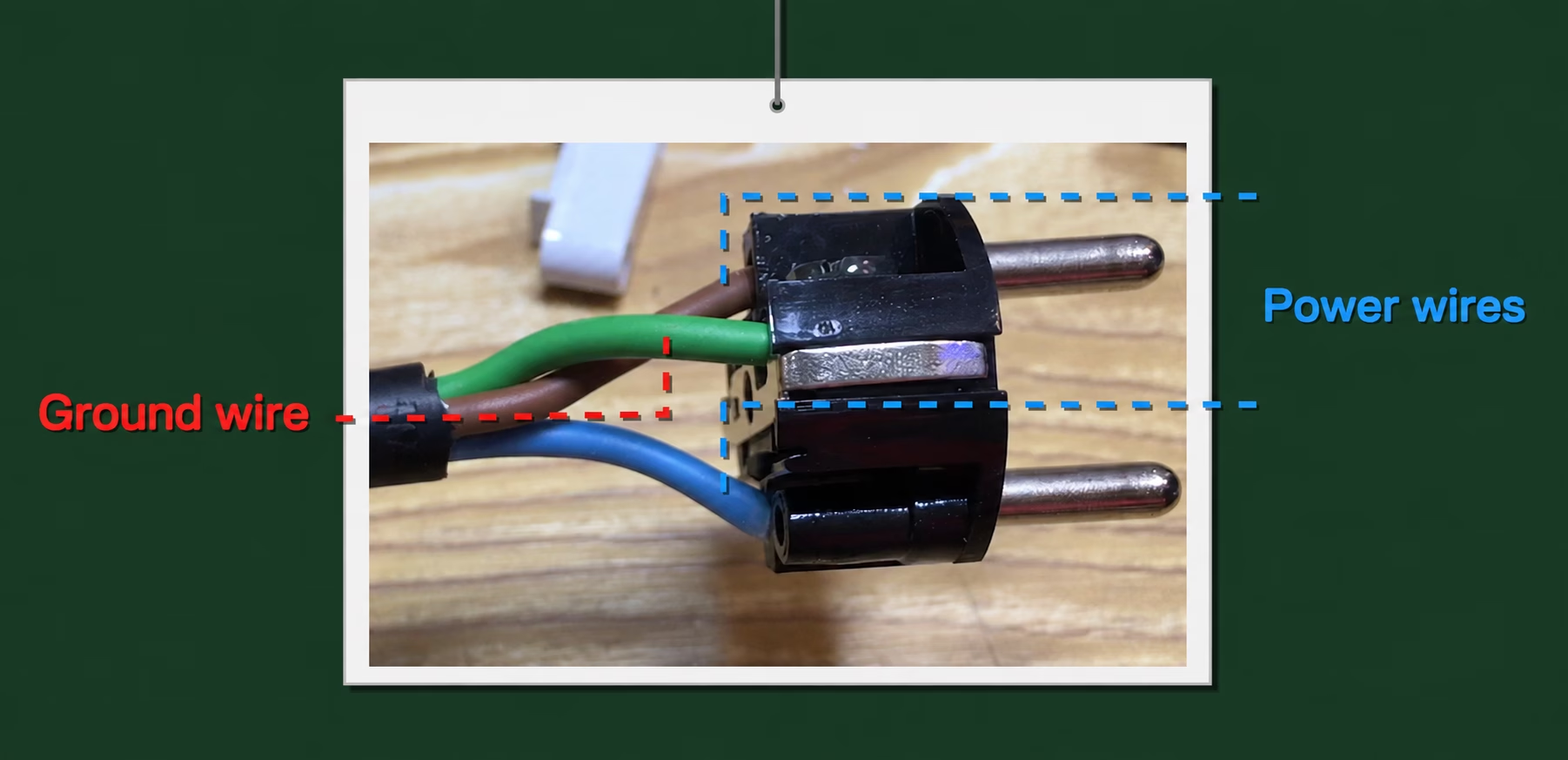
These are grounding contacts. They carry leakage current into the earth, helping protect the appliance and prevent electric shock. But what does grounding have to do with the orientation of the holes?
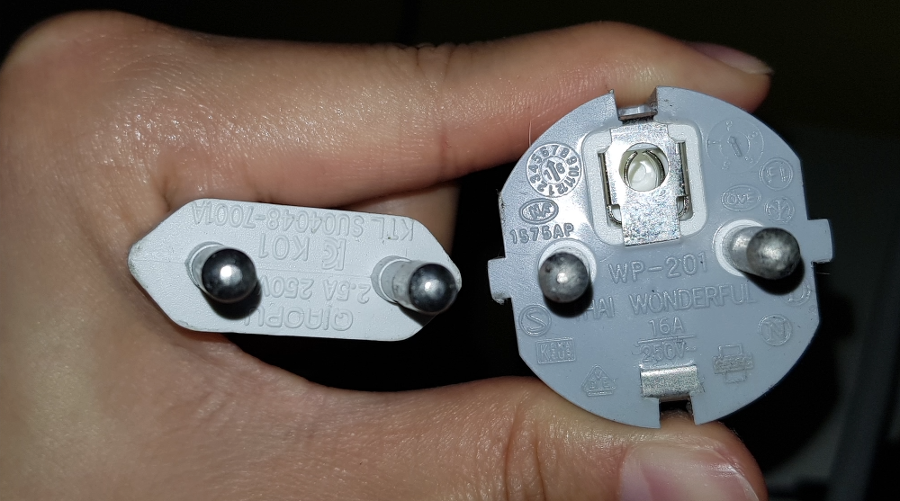
Why grounded plugs are larger and often bent
Some plugs have grounding contacts; others do not. If leakage current is small, or a product is designed safely with features such as double insulation, grounding is not necessarily needed, so it can be made without grounding contacts. The important point here is that grounded plugs need room for both the ground wire and the grounding contacts, making them considerably larger.
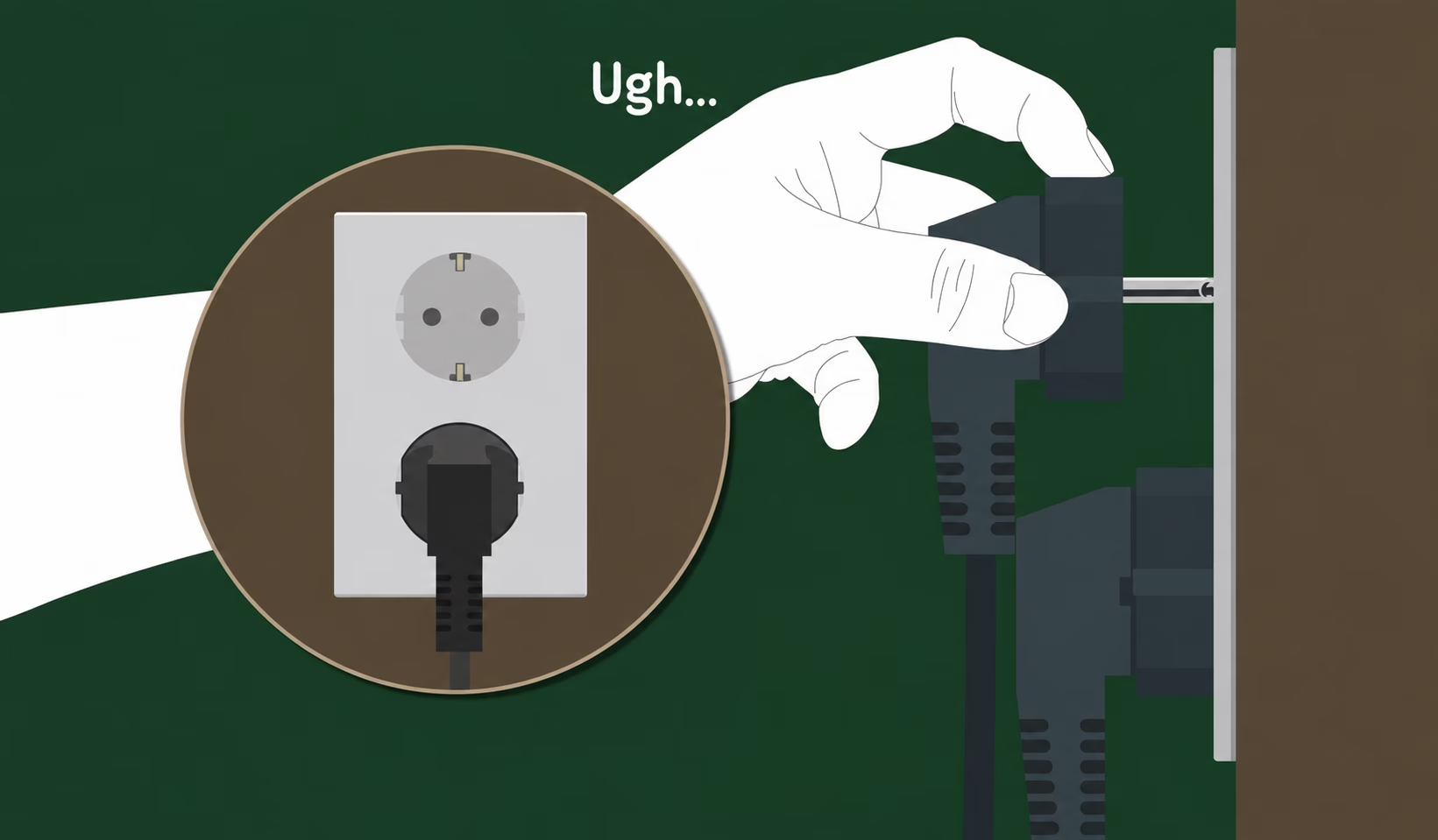
They are also often bent at a right angle. Straight versions exist too, but most grounded plugs have this bent shape so that they can be completely sealed and cannot be taken apart, for user safety.
When two plugs get in each other’s way
Now try putting two of these right-angle grounded plugs into a double outlet whose holes are horizontal. The second plug cannot be inserted properly.
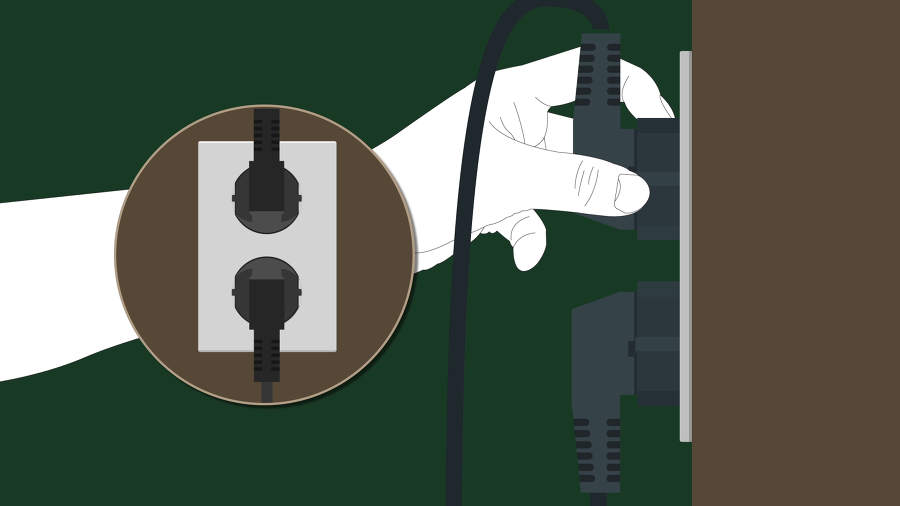
You might think you can arrange them as shown above. But that bends the cord of the upper plug. Using a cord bent this way can cause problems such as damaged wiring, so it should not be used like that.
In other words, you cannot insert both plugs normally. If an appliance is used with its plug only partly inserted, the contact area is reduced, increasing contact resistance. Overheating can then cause an electrical fire.
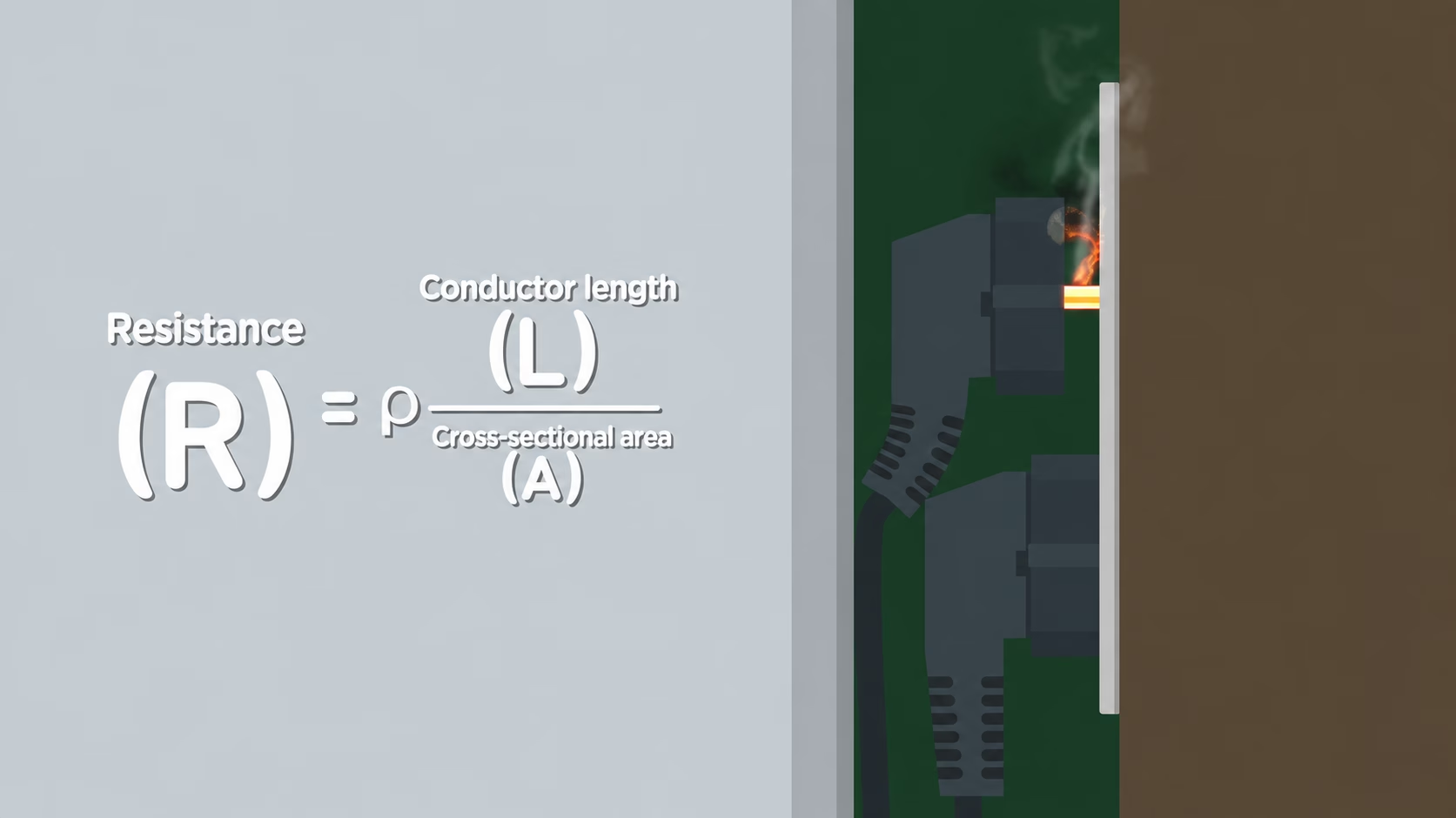
Why the holes are tilted at 45 degrees
Tilting the holes at 45 degrees resolves this problem. There is another distinction to keep in mind: outlets, like plugs, can be grounded or ungrounded.
Ungrounded outlets have horizontal holes, while grounded double outlets have holes tilted at 45 degrees. Unless a building in Korea was built a long time ago, most of its outlets will be grounded.
Grounding requirements for buildings and electrical products were strengthened after 19 people died from electric shock in a streetlight leakage accident in 2001. As a result, most double outlets in buildings are grounded and designed with their holes at 45 degrees.
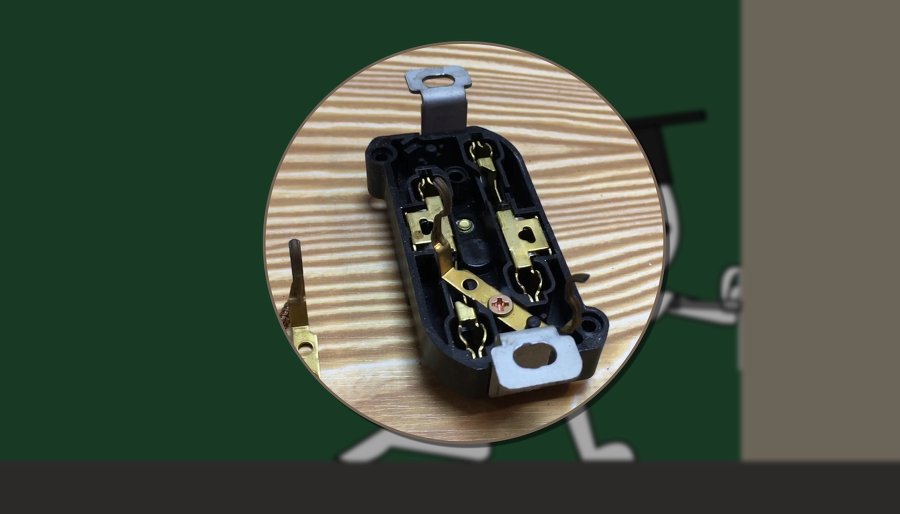
The internal layout and standard dimensions
The picture above shows a grounded outlet opened up. You can see its grounding contacts. If the holes were horizontal or vertical, those contacts would be difficult to fit in, and they could touch the power terminals, creating a risk of a short circuit.
Tilting the holes at 45 degrees therefore helps the plug and outlet connect properly while preventing short circuits, allowing electricity to be used safely.
You might wonder why the outlet cannot simply be made bigger. But outlets have specified dimensions. Making them arbitrarily larger would be uneconomical, so they have to be designed and manufactured to the established standard.
Why some power strips still have horizontal holes
That may raise another question: some grounded power strips have horizontal holes. Look closely, and you will find that these power strips have an individual switch for each socket.
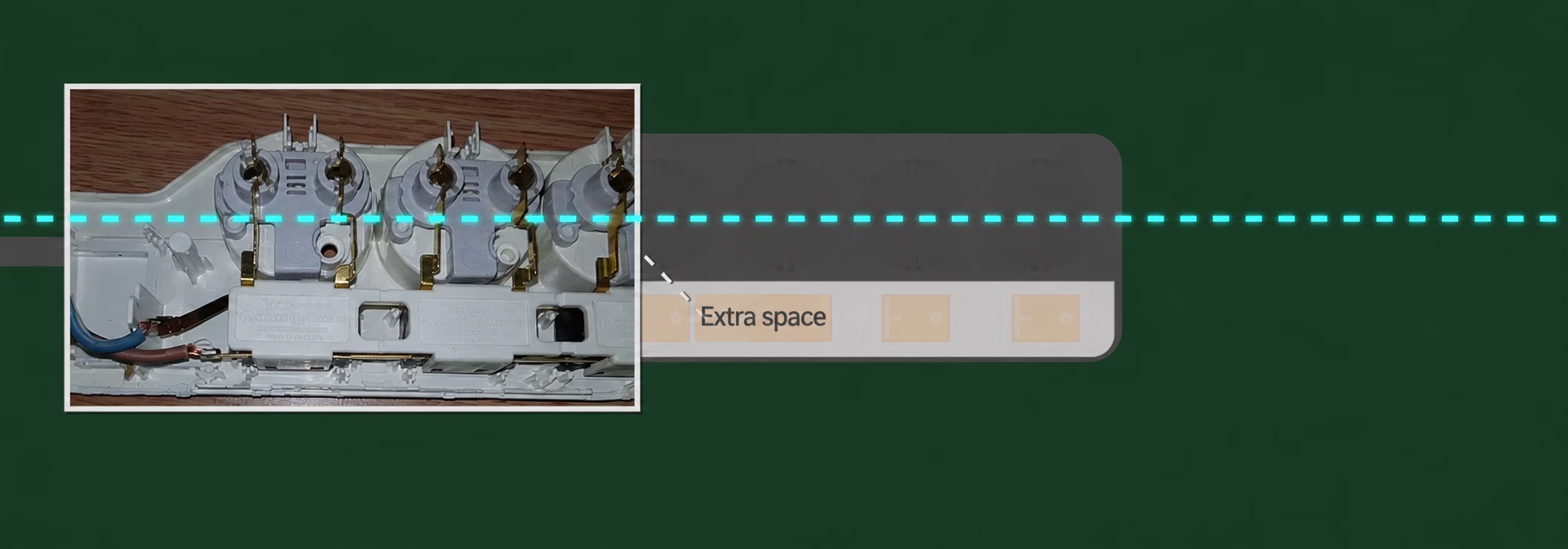
Adding separate switches creates extra room. That makes it possible to fit the grounding contacts safely even with the holes arranged horizontally. Has that answered your question?
Copyright. 사물궁이 잡학지식. All rights reserved
Read the original Korean article · More articles in English
Watch the original Samulgoongi video below. Turn on CC, then choose English (United States) under Settings → Subtitles/CC.