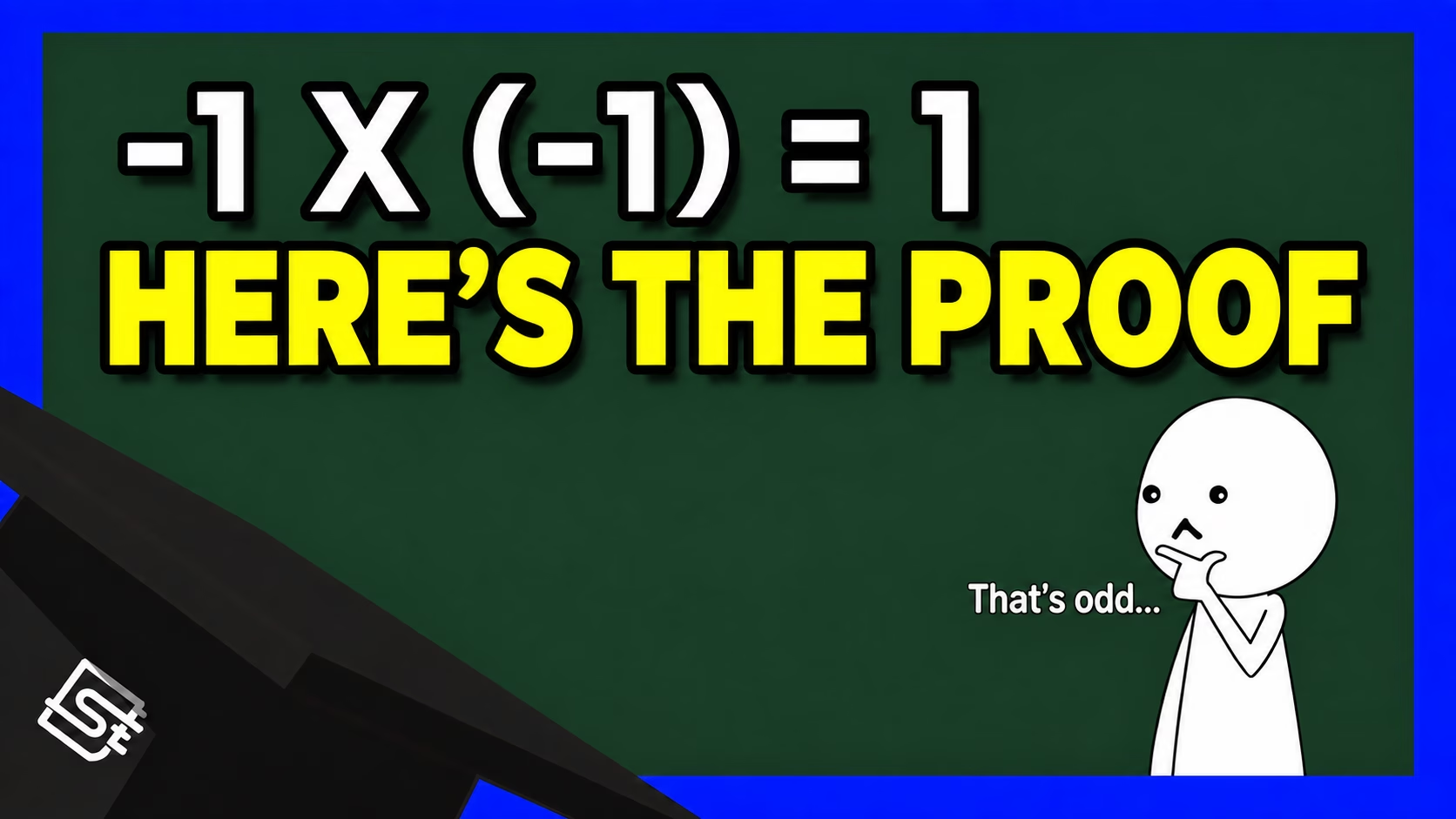
Addition, subtraction, multiplication and division are known as the four basic arithmetic operations. They are fundamental to mathematics, and multiplication is taught in the early years of elementary school.
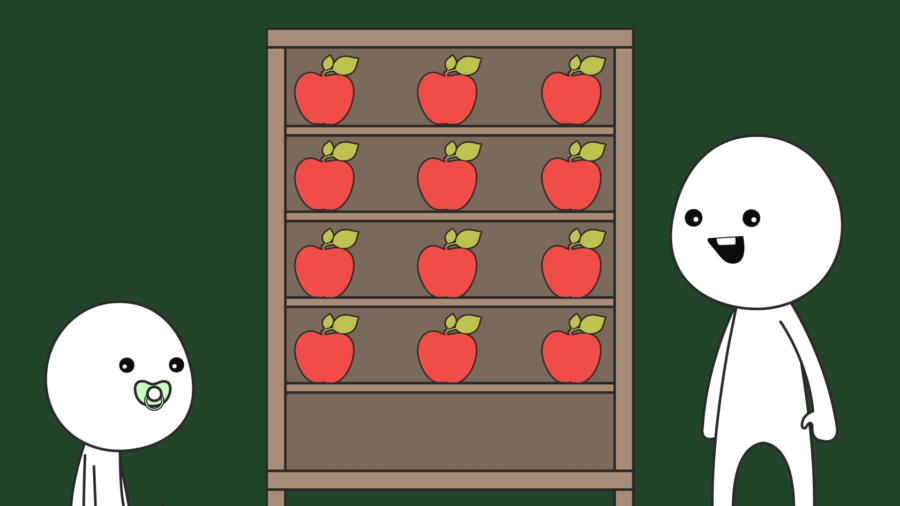
Once you learn multiplication, you can put it to use immediately. Suppose apples are arranged on a display shelf in three columns and four rows. Instead of counting them one by one, you can quickly calculate 3 × 4 and find that there are 12 apples.
Why multiplying two negatives feels strange
In middle school, students learn about negative numbers: numbers smaller than zero, written with a minus sign (−) in front. So far, there is no problem. But learning that a negative number multiplied by another negative produces a positive number—a number greater than zero—can be quite confusing.
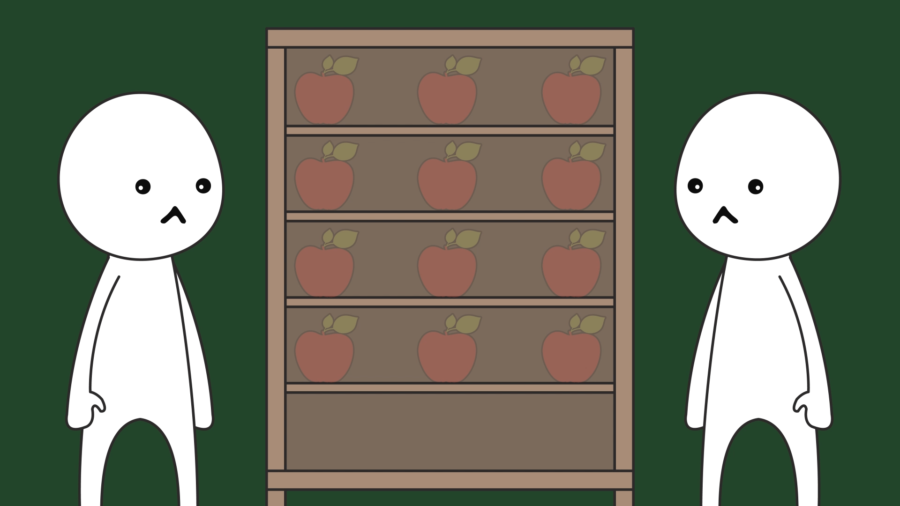
Try applying the idea to the same everyday example. It is difficult even to imagine apples arranged in −3 columns and −4 rows. Stranger still, using multiplication to calculate the number of apples gives exactly the same result as before. Why, then, did mathematicians define the product of two negatives as positive?
Using the distributive property
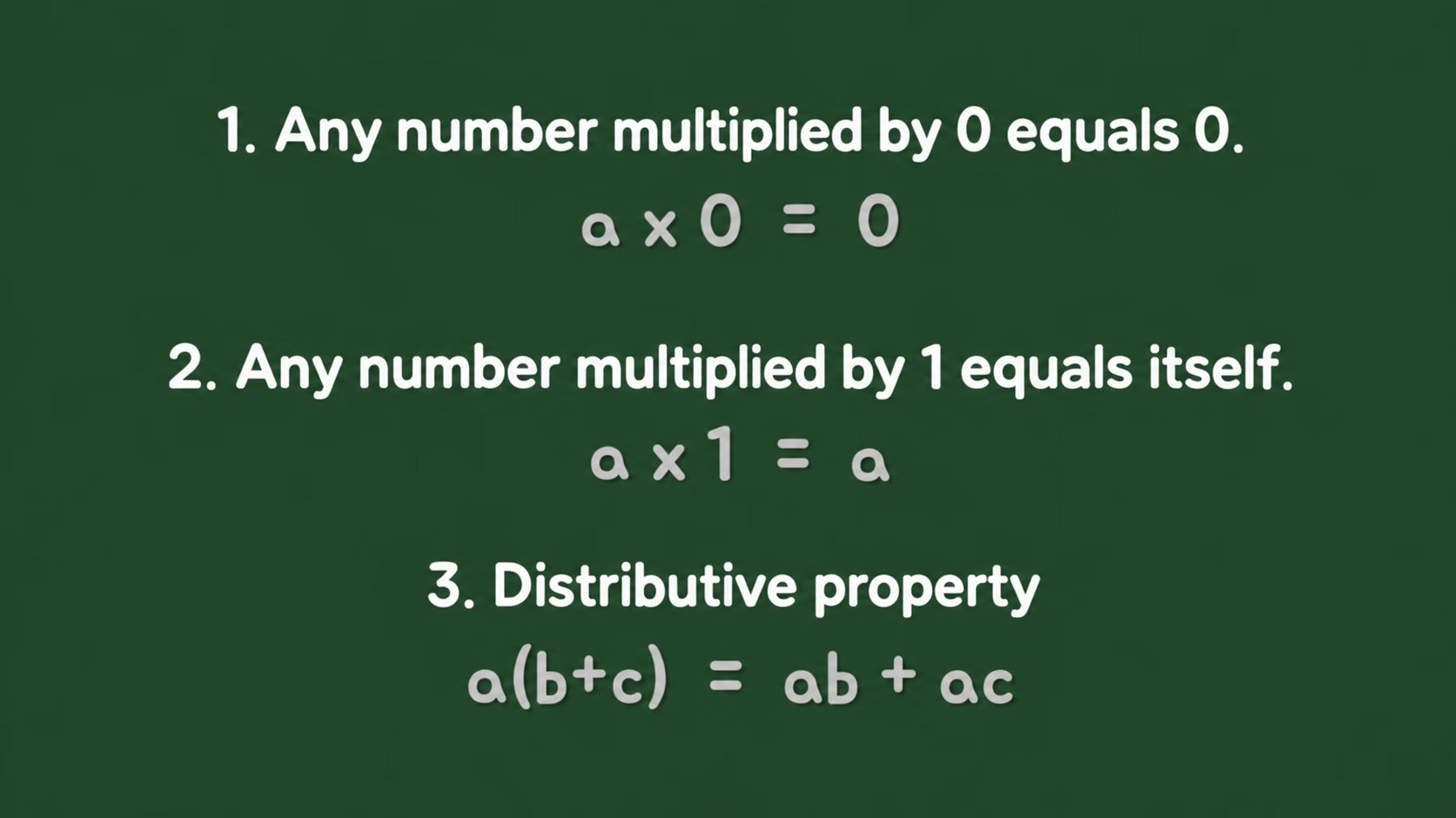
The multiplication properties shown above are taught in elementary school. Those properties alone can answer our question. First, consider (−1) multiplied by 0. By the first property, the result must be 0, as shown in equation ⓐ.
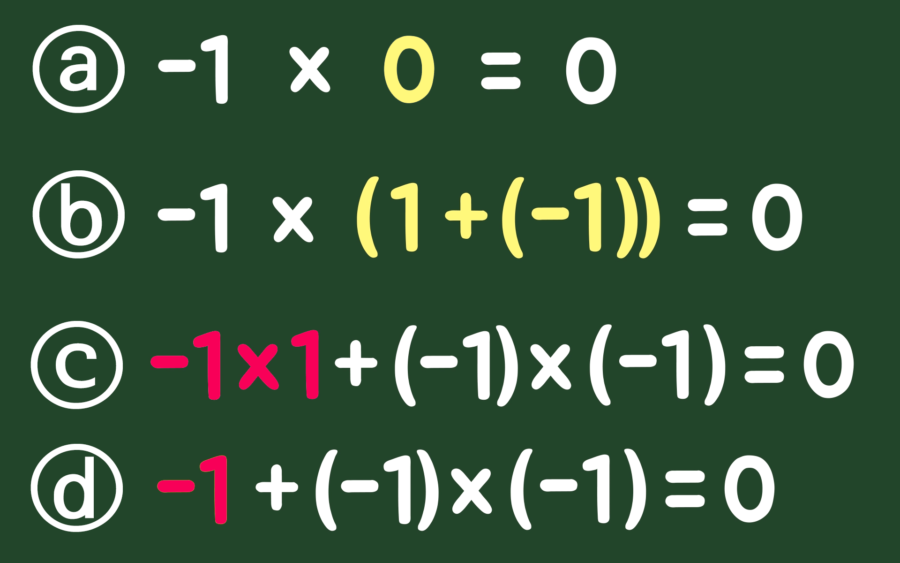
Zero can also be written as 1 + (−1), giving equation ⓑ. Applying the distributive property produces equation ⓒ. Within that expression, (−1) × 1 is −1 itself, by the second property.
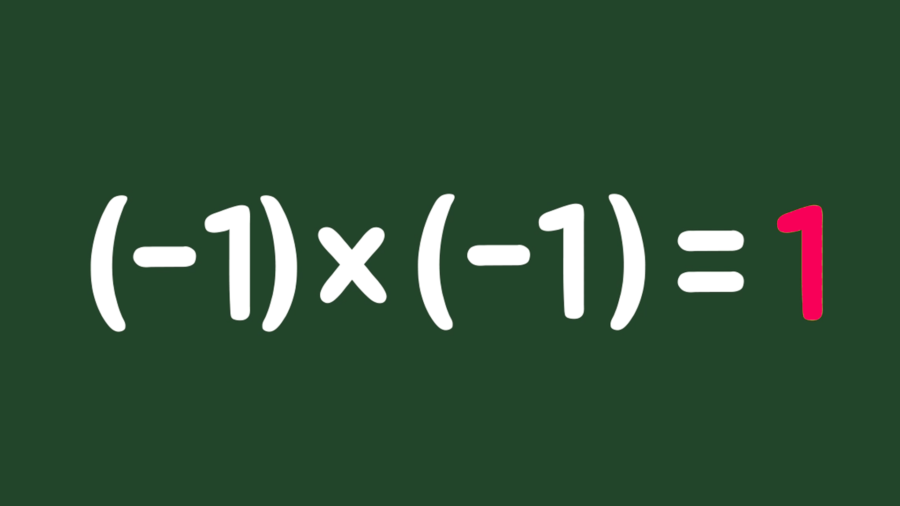
Rearranging the expression gives equation ⓓ. For that equation to hold, (−1) × (−1) has to equal 1. In other words, if we want to preserve the properties of multiplication, it is natural to define the product of two negative numbers as positive.
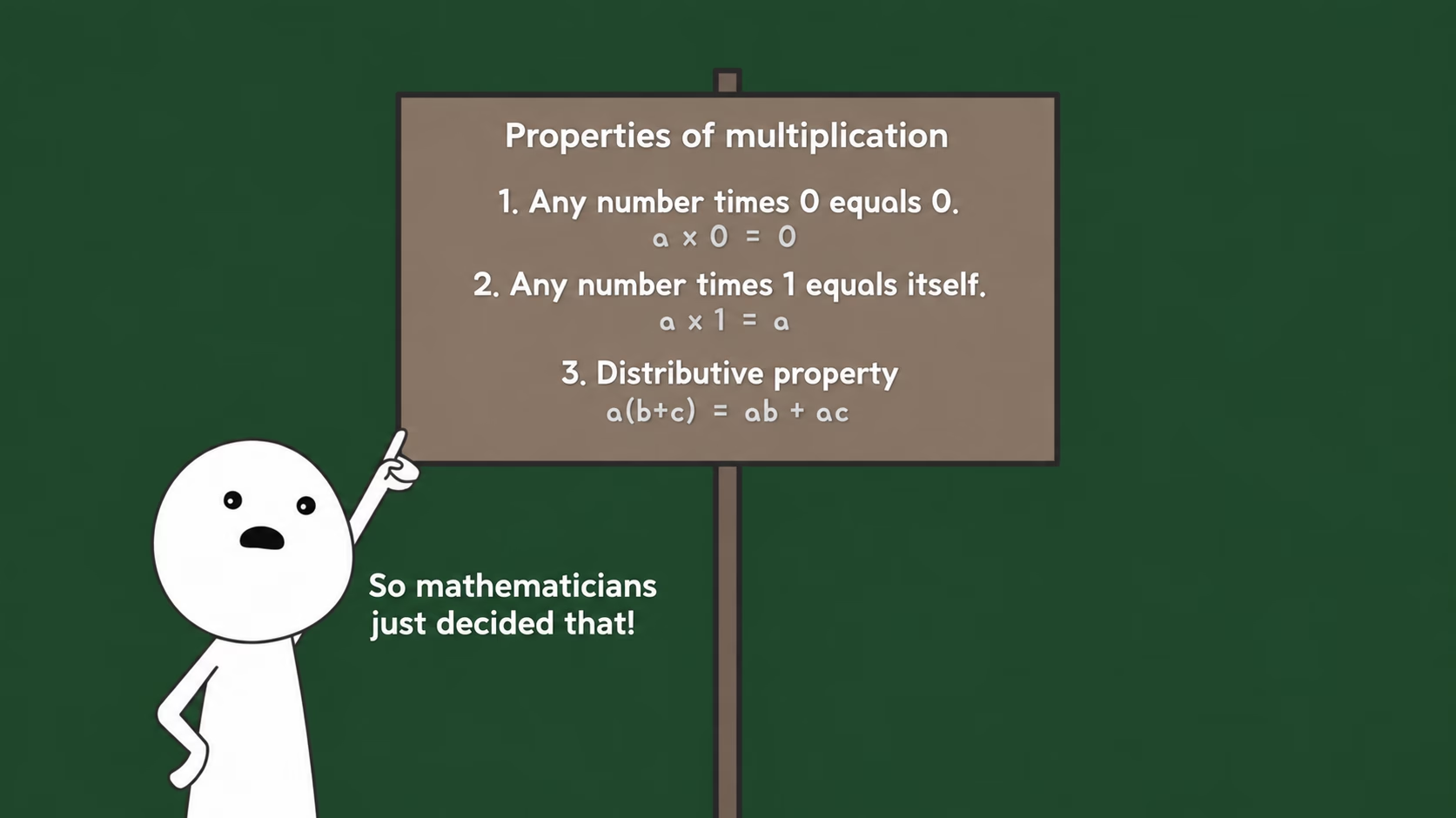
There are various other ways to show that the product of two negatives is positive, but the reasoning above is widely used because it is especially simple and straightforward. Even so, the process might leave you feeling a little uneasy. It seems as though the concept was defined however someone pleased, and we simply accepted it as obvious.
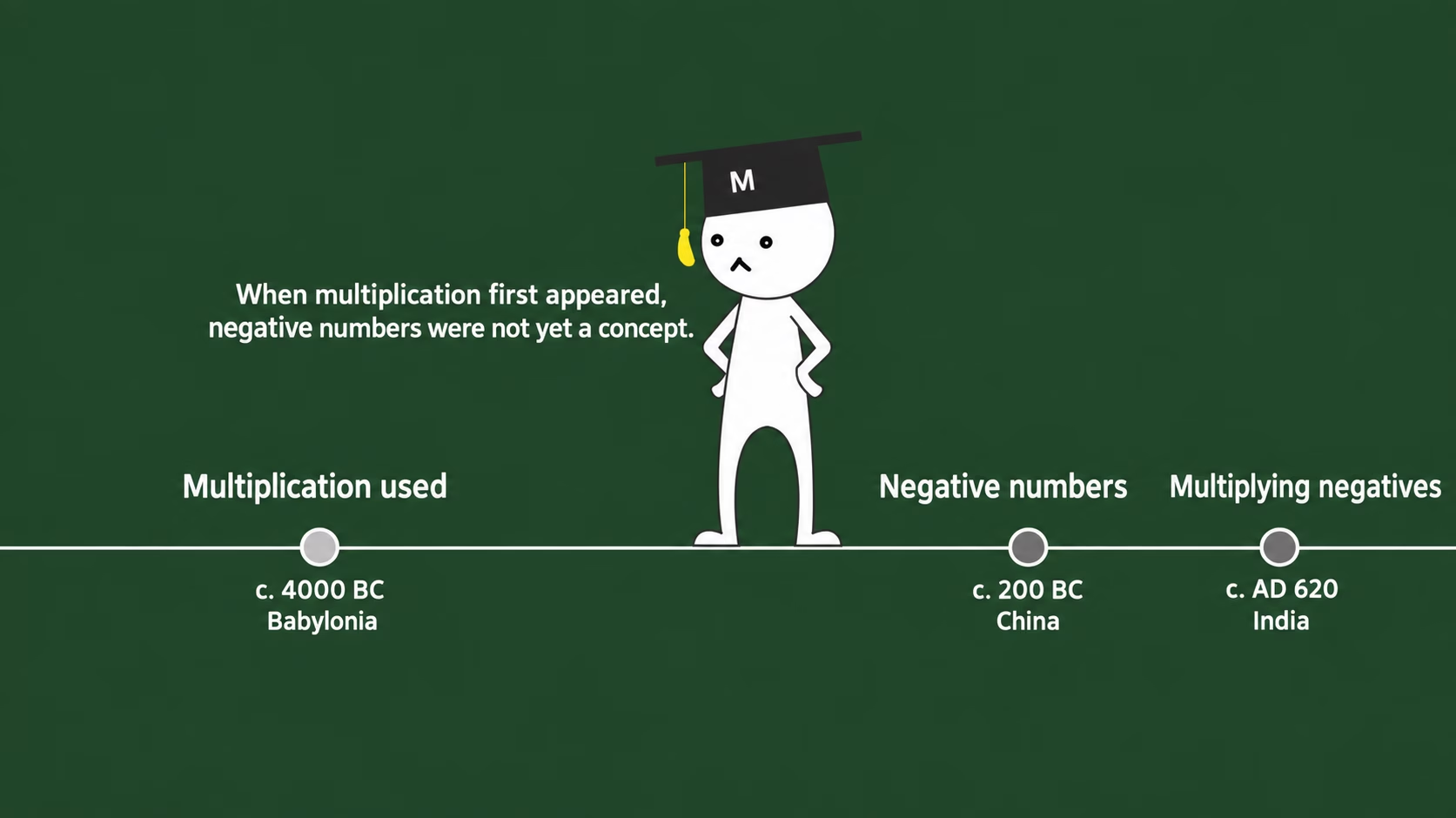
Generalization: keeping the properties of multiplication
Multiplication originally applied only to particular kinds of numbers greater than or equal to zero. But by developing the reasoning while preserving its properties, we can define multiplication for numbers below zero as well. In mathematics, extending the use of an existing concept while retaining its properties is called generalization.
Some mathematical rules you learned at school without knowing why they work are products of generalization. Examples include “any nonzero number raised to the zeroth power is 1” and “raising a number to the power of 1/2 gives its square root.”
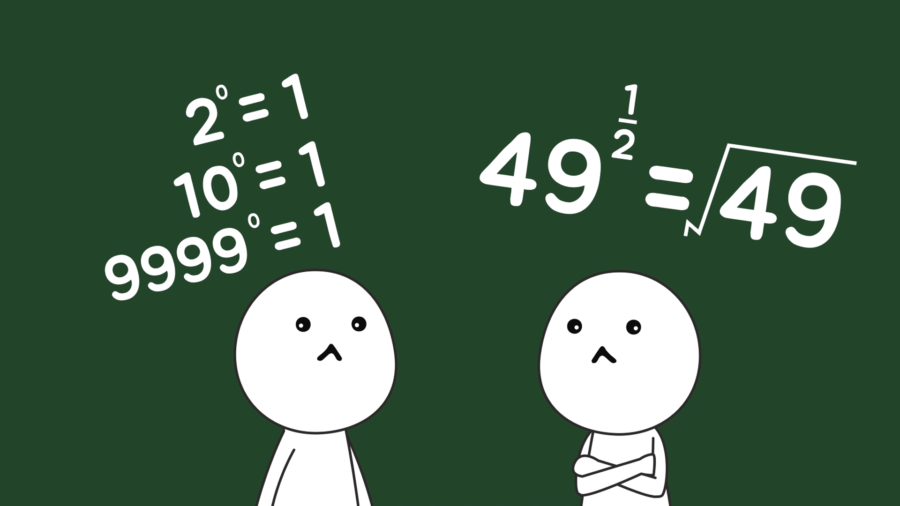
Generalization lets us use mathematical concepts in a wider range of situations, making mathematical theory more refined. That is why it is such an important technique. Has that answered your question?
Copyright. 사물궁이 잡학지식. All rights reserved
Read the original Korean article · More articles in English
Watch the original Samulgoongi video below. Turn on CC, then choose English (United States) under Settings → Subtitles/CC.